





 Including FREE delivery











What is hair loss?
Hair loss in men refers to the progressive loss of scalp hair, often noticeable at the forehead, temples and crown. Androgenetic alopecia in men (hereditary hair loss) is the leading cause, where follicles become sensitive to DHT, producing finer hair until bald patches appear.
Around 60-80% of men are affected by noticeable thinning or baldness in their lifetime – sometimes starting as early as their 20s. Because signs of alopecia in men can affect confidence and daily life, early assessment makes a real difference.
The hair growth cycle and normal hair shedding
Hair develops in three steps: growth (anagen), transition (catagen), and resting (telogen). Approximately 85-90 percent of the hair is in the growth phase, which lasts approximately 2-6 years. The transition phase of hair can last several weeks, during which the follicle shrinks. The resting phase takes 2-4 months, after which hair sheds – typically around 50-100 strands a day. When this cycle is disrupted, hair loss happens. Follicles shrink, the growth phase shortens, and shedding rises in such conditions as alopecia.
How hair loss develops over time
Hereditary hair loss occurs gradually, not suddenly. It usually begins with mild thinning of the temples or crown. When follicles become sensitive to DHT, they produce finer, shorter hair, a phenomenon known as miniaturisation. Follicles might cease producing visible hair over the years. The condition generally progresses from a receding hairline and crown thinning to more extensive baldness. Without earlier hair loss treatment, regrowth is less likely once follicles become inactive.
Common types of hair loss
There are many possible reasons for male pattern baldness. Inherited hair loss is the foremost cause, although other medical or lifestyle habits can disrupt the hair's function. It is imperative to know the type of hair loss when considering which treatment to use.
Pattern hair loss (androgenetic alopecia)
Androgenetic alopecia is the most prevalent form of male hair loss, driven by genetics and DHT sensitivity. The hormone gradually shrinks hair follicles, causing thinner hair and eventually stopping growth, typically at the temples, the hairline, and the crown.
It develops slowly, often starting in the twenties. Treatments for hair loss may not fully reverse it, but they can slow progression and help maintain existing hair.
Stress-related hair shedding (telogen effluvium)
Telogen effluvium is temporary hair loss which results from stress, illness, an operation, or major life changes. These events force more follicles into the resting phase, causing visible shedding weeks or months later. In contrast to hereditary hair loss, the follicles remain healthy, and growth usually resumes once the cause is resolved.
Autoimmune and patchy hair loss conditions
Some types of hair loss are caused by the immune system attacking hair follicles. The most common is alopecia areata, or the scalp or body region loss that is accompanied by a sudden round patch of hair loss. The condition tends to appear suddenly and can even resolve on its own.
Hair loss caused by physical or chemical damage
External factors can also cause thinning hair and further hair loss. Chemicals, heat styling, and tight hairstyles can damage the hair shaft and follicles, while constant tension may lead to traction alopecia. Scalp infections and inflammation can also harm follicles if left untreated. Hair loss can also result from factors beyond your control. Chemicals, heat styling, and tight strands can damage the hair roots and follicles, and excessive stress can cause traction alopecia.
Correct diagnosis helps select the best treatment for hair loss:
- Male androgenetic alopecia (hereditary male hair loss) –The most frequent form, caused by a genetic sensitivity to dihydrotestosterone (DHT). Hair follicles gradually shrink, leading to thinning hair at the temples, forehead, or crown and, eventually, a receding hairline or bald spots.
- Telogen effluvium (diffuse hair loss in men) – A reversible form in which an above-average number of hairs simultaneously enter the resting phase. Triggers can include physical or psychological stress, infections, nutrient deficiencies or medication.
- Alopecia areata – An autoimmune disease in which the immune system attacks the follicles. Sudden, round, sharply defined bald patches appear, often in episodes.
Understanding the root cause allows for appropriate action to stop hair loss in men.
Possible causes of hair loss in men
There are also internal and external factors that can result in hair loss. Genetics – particularly DHT – shrinks follicles over time. Nutrient deficiencies, stress, illness, surgery, rapid weight loss, and certain medications can also disrupt growth and lead to shedding. Scalp conditions, such as psoriasis, dermatitis, or fungal infections, may damage follicles, and must be treated before regrowth can occur. The most common hair loss causes include:
- Genetics and hormones (DHT) – the most common factors. Dihydrotestosterone shortens the hair cycle, causing the follicles to produce increasingly thinner hair.
- Nutrient deficiencies – vitamin deficiency, particularly in iron, zinc, vitamin D, B or protein, can impair hair growth.
- Stress or illness – acute or chronic stress, infections, fever, surgery or weight loss can trigger telogen effluvium.
- Medication – certain drugs such as chemotherapy, beta blockers, retinoids, antidepressants or anticoagulants affect the hair cycle.
- Autoimmune or scalp disorders – Conditions such as alopecia areata, seborrheic dermatitis, psoriasis, or fungal infections can also lead to localised or diffuse hair loss.
Hair loss signs and early symptoms
Sometimes hair loss does not start as clear bald spots. In many cases, early symptoms are gradual and may be subtle in the beginning. Early recognition of these common symptoms can encourage men to receive suitable treatment before serious hair loss occurs.
Gradual hair thinning and receding hairlines
A slowly receding hairline is one of the first signs of genetic hair loss. Hair might start to thin around the temples, providing that signature “M” shape. Additionally, hair density on the crown might appear to decrease. Since the change occurs slowly, it may take months or years to be noticeable
Sudden or excessive hair shedding
If a lot of hair falls out during washing, brushing or while sleeping, it's a sign of a transient shedding condition called telogen effluvium. This type of hair loss usually affects the entire scalp rather than specific areas. While the shedding can seem as dramatic as you might predict, it generally gets better once the trigger is removed.
Patchy hair loss or scalp changes
Round or irregular patches of bald hair may be indicative of autoimmune conditions like alopecia areata. Hair loss may also happen at the same time as scalp symptoms, such as itching, redness, flaking or inflammation, in some cases. Signs may be signs of infections or dermatologic diseases in need of medical treatment.
- Gradual thinning or reduced density
- Rapid shedding in showers or on pillows
- Receding hairline
- Round bald patches
Seek a GP or dermatologist if hair loss is rapid, occurs very early or is accompanied by scalp symptoms.
When a medical evaluation is recommended
Mild hair thinning is common, but certain situations warrant professional help. Your GP or dermatologist can help determine the underlying cause and rule out impending medical conditions. Medical advice should be sought if hair loss occurs suddenly, progresses rapidly, begins at an unusually young age, or is accompanied by scalp irritation or pain.
Diagnosis of hair loss typically involves several complementary approaches. A detailed history and clinical examination – noting the pattern, onset, and rate of loss – is the starting point. Dermoscopy (trichoscopy) allows magnified visualisation of follicle miniaturisation, hair shaft diameter variability, and perifollicular signs without invasive procedures. Blood tests help rule out contributing causes such as thyroid dysfunction, iron deficiency, or hormonal imbalances. A pull test assesses active shedding by gently tensing a small bunch of hairs. When the diagnosis remains uncertain – particularly to distinguish androgenic alopecia from scarring alopecias or inflammatory conditions – a scalp biopsy provides histological confirmation from a small tissue sample.
How hair loss treatments work
Hair loss treatments aim to target the underlying biological processes that result in hair thinning, instead of simply the surface symptoms. For most – particularly hereditary hair loss – it means addressing hormone activity, enhancing follicle function and promoting the natural hair growth cycle. Early interventions help to slow the progression, stimulate hair growth, and, in some cases, stimulate regrowth and enhance hair health.
Hormonal mechanisms involved in hair thinning
The hormonal cascade behind hair thinning is essentially a three-step process: androgen precursors are converted to testosterone in the skin, testosterone is then converted to the far more potent DHT by the enzyme 5α-reductase, and DHT then binds to androgen receptors concentrated in susceptible follicles to trigger progressive miniaturisation.
How dihydrotestosterone affects hair follicles
Dihydrotestosterone acts on androgen receptors in genetically sensitive follicles. This interaction over time shortens the growth phase of the hair cycle and shrinks the follicle. This leads to the hair that is formed getting smaller and weaker until it fails to grow.
Why only the crown and temples?
Not all hair follicles respond to DHT equally. The follicles on the top of the head and hairline contain more androgen receptors, making them particularly sensitive to DHT. The hair on the back and sides retains fewer receptors and greater resistance to miniaturisation, which is why those areas remain dense even in advanced baldness, and why hair transplants from those donor regions retain their resistance after being moved.
How treatments support hair regrowth
The current hair loss therapies are designed to modulate these factors. Some of these effective treatments work by increasing blood flow to the scalp and prolonging the growth phase of hair follicles, while other treatments reduce the production or effects of DHT.
A tailored approach offers the best treatment for male pattern hair loss.
Hair loss medication
Medical treatments are some of the best ways for treating hair loss in men with androgenetic alopecia. Unlike the cosmetic product, the medications that are clinically approved target the underlying causes of hair thinning, like hormonal imbalance and reduced hair growth cycles; thus leading to a delay of the damage or maintenance of the already existing hair.
Topical solutions (minoxidil)
Topical hair loss treatments, such as minoxidil, are applied to the scalp to provide additional blood flow and lengthen the growth phase, which helps strengthen hair and support regrowth. This is often done for early to moderate thinning and requires continuing use, since stopping can result in hair loss returning.
Topical minoxidil (5% foam, 5% solution, and 2% solution) causes hair regrowth in both frontotemporal and vertex areas. In a clinical trial, 5% topical minoxidil was clearly superior to the 2% solution and placebo in increasing hair regrowth, producing 45% more regrowth than the 2% solution at week 48 and an earlier response. Both concentrations were well tolerated with no evidence of systemic effects.
Oral medications used to treat hair loss (e.g. finasteride)
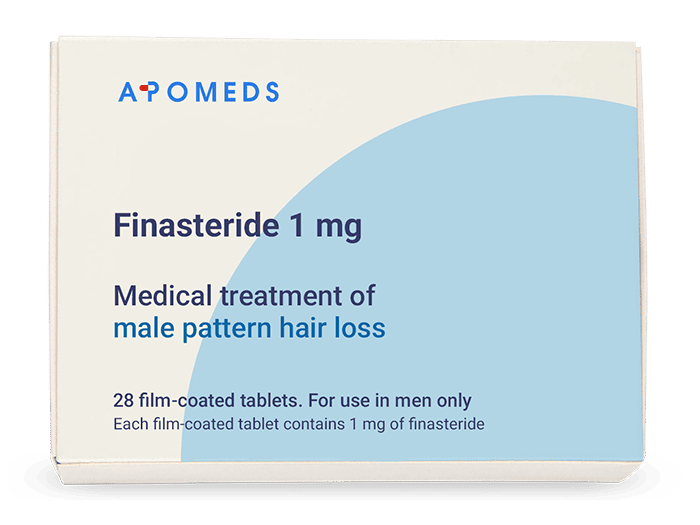
Oral medication aims to control a major cause of hereditary hair loss, the hormone dihydrotestosterone (DHT). Finasteride is a prescription medication that works by decreasing testosterone to DHT conversion, and thus helping protect hair follicles from shrinking. This hair loss treatment is most beneficial among men with androgenetic alopecia and is most often prescribed for a long-term solution, which slows down hair loss while preserving hair density. Another popular branded version of finasteride, called Propecia, is also widely used.
Both options must be medically examined for appropriateness and safety.
Combination therapies: topical + oral
Combination hair loss treatment is often more effective. Using a topical like minoxidil with an oral medication like finasteride targets multiple mechanisms – reducing DHT while stimulating follicles and promoting healthy hair growth. This approach offers a more consistent, integrated strategy for hair loss.
Laser therapy as a hair loss treatment for men
Low-level laser therapy (LLLT) uses red-spectrum light (typically 630–670 nm) to stimulate hair follicles, shifting them from the resting phase back into active growth by boosting mitochondrial energy production and activating the same Wnt/β-catenin pathway suppressed by DHT. Its effects observed in clinical trials appear broadly comparable to topical minoxidil. It is safe, non-invasive, and best used as an early-stage or adjunct treatment rather than a standalone solution.
Antifungal therapy
Shampoo with the antifungal medication Ketoconazole (2%) is occasionally used as an adjunct in male pattern baldness because it mildly reduces scalp DHT and has anti-inflammatory properties – one trial found it comparable to 2% minoxidil for improving hair density. It is not a primary treatment but a low-risk add-on.
Separately, oral antifungals like terbinafine are used when hair loss is caused by tinea capitis (scalp ringworm), a fungal scalp infection producing patchy inflammatory hair loss. This is a distinct condition from AGA and is far more common in children.
Supportive care for hair loss cure
- Hair loss products for men: shampoos, serums, etc.
- Lifestyle adjustments: stress management, nutrition
- Natural approaches: e.g, gentle scalp massages, a balanced diet, and herbal oils as a supplement.
Before using any hair loss medication or over-the-counter remedy, it is advisable to seek medical advice to clarify the benefits and risks.
|
Who can benefit from hair loss treatment?
Hair loss treatment can be beneficial to many men who thin their hair out, particularly early. Treatments work better if the follicles are still active, so intervening in cases where their hair is thinning can significantly improve outcomes and regrow hair faster.
But fit depends on the culprit, the stage of hair loss and individual health factors. A medical evaluation is important for two things: to figure out what's wrong and to decide on the best way to treat it. This helps to avoid further hair loss, if possible.
Differences between male and female pattern baldness
Male and female pattern hair loss share a hormonal cause but differ in appearance.
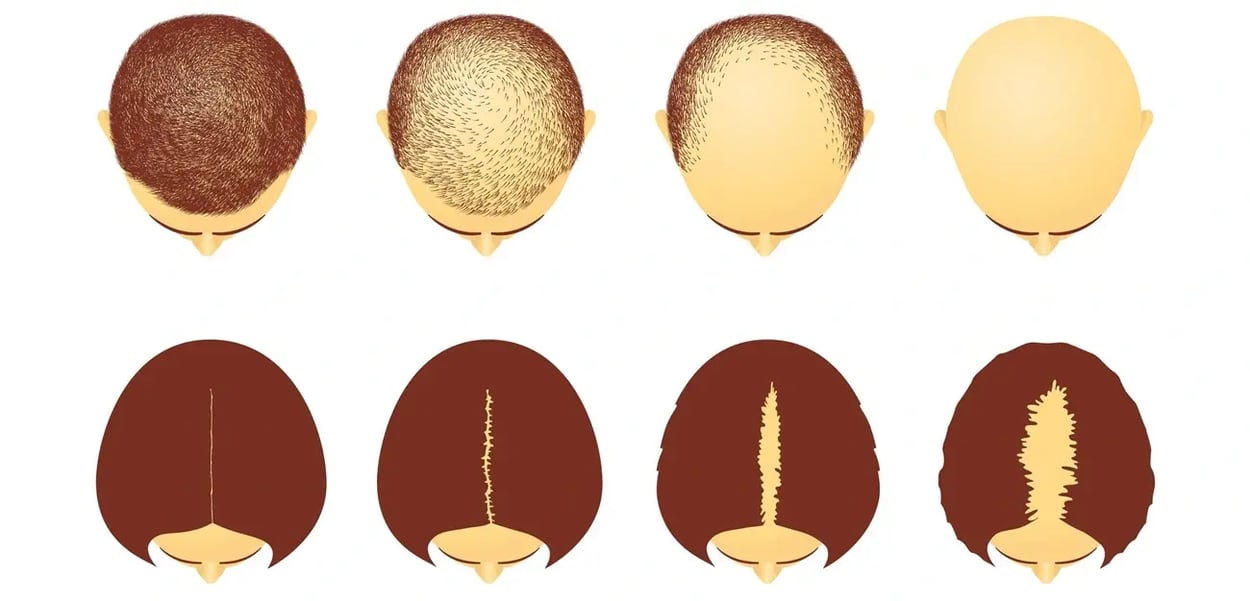
Male hair loss tends to follow a more predictable and aggressive progression. It typically begins with a receding hairline at the temples, forming an "M" shape, then progresses to thinning at the crown. In advanced stages, these two areas merge, leaving only a horseshoe-shaped ring of hair around the sides and back of the head.
Female pattern baldness, by contrast, rarely causes a receding hairline or complete baldness. Instead, hair thins diffusely across the top and crown of the scalp, while the frontal hairline is usually preserved. The parting widens, and the scalp becomes increasingly visible through thinning hair.
Age considerations and treatment suitability
Hair loss can appear in adulthood and is common for men in their twenties or thirties. Early hair loss treatment enhances the results by keeping the follicles working. Preventive treatment can slow progression in younger men and can help older men hold onto and densify existing hair. Hair loss often starts in adulthood, typically experienced by men in their twenties or thirties.
Situations where treatment may not be appropriate
Some hair loss can’t be aesthetically treated. Temporary shedding from stress, illness, or nutritional deficiencies may resolve once the cause is addressed. Follicles that are slow to grow or scarred for an extended time period may have limited regrowth, and certain medical conditions or medications can limit treatment options. You will need to see one of our experts to check for risks, make a diagnosis, and decide on a treatment plan for new hair growth or options to consider.
How Apomeds helps
Apomeds provides convenient access to male pattern baldness, including online hair fall treatment with discreet delivery. After a medical review, doctors prescribe appropriate therapy to help men stop hair loss and stabilise growth, with support for repeat orders to continue progress.
Frequently asked questions about hair loss
Suffering from hair loss? Here are the most frequently asked questions – and clear answers.
Is hair loss reversible?
That depends on the cause. In the case of hereditary hair loss, the process can usually only be slowed down or partially reversed. In the case of temporary triggers such as stress, deficiencies or illnesses, the hair can often recover after the cause has been treated.
No single intervention reliably prevents hair loss in genetically predisposed individuals, though starting treatments such as minoxidil or finasteride early – before significant miniaturisation has occurred – can substantially slow progression and preserve existing hair for longer.
How to stop hair loss?
A clear diagnosis is critical for finding the right hair loss solution. Depending on the cause, medical treatments, lifestyle adjustments, dietary supplements, or hair loss products can help. Minoxidil and finasteride have proven effective as alopecia treatment for men. Early action also increases the chance of reducing hair loss and stabilising the hair's appearance.
Are medications for hair loss safe?
Medications such as minoxidil and finasteride are considered well-researched and are frequently used. Side effects are possible, but do not occur in everyone. It is important to consult a doctor to weigh up the benefits and risks on an individual basis.
How much hair loss is normal?
Around 50–100 hairs fall out every day – this is normal and part of the healthy hair cycle. If the number is significantly higher, the symptoms persist, or bald patches appear, the cause should be investigated by a doctor.
Which doctor should I see for hair loss?
A GP or dermatologist can diagnose alopecia in men and recommend targeted baldness treatment. Online medical consultations offer a private, fast option for the hair loss solution for men.