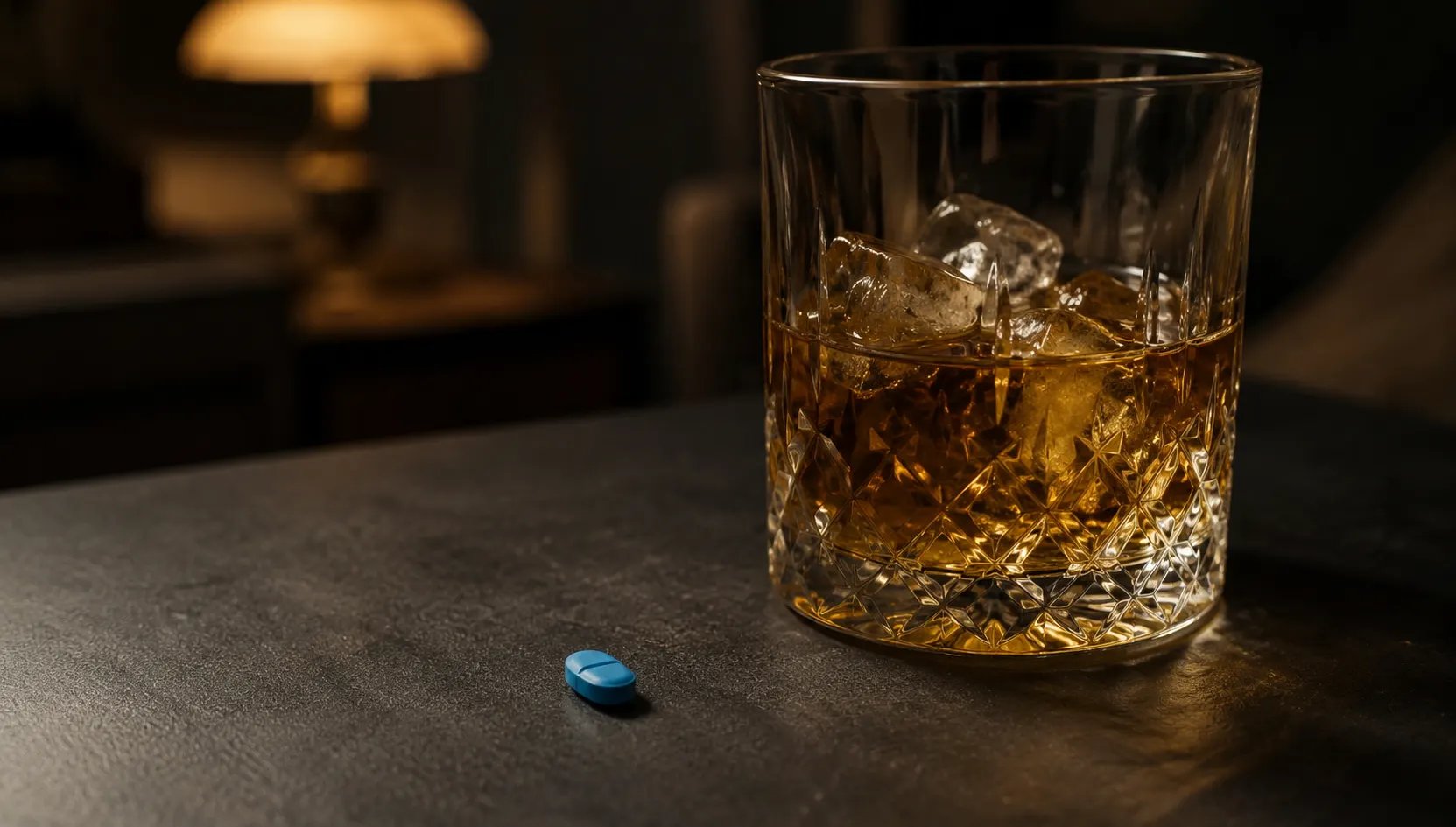

Sudden loss of erection ability, when things have always worked before, is unsettling. Occasional erection trouble is common, and a sudden episode is often linked to temporary factors such as stress, tiredness or alcohol.
Sudden erectile dysfunction (ED) develops quickly and may vary from one occasion to another, which can suggest a different underlying pattern from erection problems that develop gradually over time.
Knowing the difference helps you work out whether this is a passing episode or a reason to get checked.
Sudden vs. chronic erectile dysfunction: what's the difference?
The pattern of onset is one of the first things a clinician looks at, because it hints at the root cause.
Sudden ED may vary between occasions and may occur despite preserved erections at other times, such as during masturbation or on waking, particularly when psychological or situational factors contribute. ED caused predominantly by physical factors often develops gradually and may be accompanied by a reduction in spontaneous or nocturnal erections, although the pattern varies between individuals. Recognising which pattern fits is the first step in understanding your erectile dysfunction symptoms.
That distinction matters. UK clinical guidance treats variable symptoms, sudden-onset erectile dysfunction and the presence of early-morning, nocturnal or self-stimulated erections as pointing towards a psychological cause, while constant symptoms, gradual onset, and the absence of those erections point towards a physical (organic) one. [1]
The same split is recognised internationally: men with psychogenic ED tend to have sudden onset with good-quality spontaneous or self-stimulated erections, whereas organic ED usually comes on gradually. [2]
None of this is a self-diagnosis test. Preserved morning erections make a psychological contribution more likely, but they don't rule out a physical cause, and many cases are a mix of both. It's a clue, not a verdict.
Is sudden erectile dysfunction temporary?
Sometimes. When sudden erectile dysfunction symptoms are driven by a situation, a stressful week, too much alcohol, exhaustion, a new worry, they frequently settle once that trigger passes. Psychogenic ED is also one of the few forms UK guidance considers potentially curable rather than only manageable, alongside hormonal and post-traumatic causes in younger men. [1]
That's the hopeful part. The honest part is that "temporary" isn't guaranteed, and there's no fixed timeline. A single off night means very little. Problems that keep happening over several weeks, or that don't line up with an obvious trigger, are worth assessing rather than waiting out. Occasionally, sudden ED is the first visible sign of something physical, and persistent or unexplained cases deserve a check.
Causes of erectile dysfunction with a sudden onset

An erection relies on healthy nerves and blood vessels carrying signals and blood through the pelvic area and into the penis, so disruption to these pathways can affect erectile function. [2]
Sudden ED can be related to psychological or situational factors, medication changes or other recent changes, although an organic cause cannot be excluded based on the speed of onset alone. If you want the fuller picture beyond sudden onset, our guide to the causes of erectile dysfunction covers the physical and psychological factors in more depth.
Psychological causes and mental health
Psychological factors and mental health conditions are among the most common reasons for erectile problems that start abruptly, especially in younger men, where anxiety, depression, stress and relationship issues carry more weight than in older men.
Performance anxiety shows how this works. Stress and anxiety raise activity in the sympathetic nervous system, the body's "fight or flight" branch, and that shift works against the relaxed state an erection needs. [3] One difficult encounter can then feed the next: worry about repeating it becomes its own obstacle, and a cycle sets in. This is why sudden ED can appear in a man with no physical health problem at all.
Physical causes and health conditions
A recent medication change is one possible physical explanation for a sudden change in sexual function, covered in its own right below.
Beyond that, the slower vascular and metabolic causes, diabetes, high blood pressure, raised cholesterol, usually produce gradual rather than abrupt ED, though they're worth assessing because sudden ED can occasionally be an early marker of them. Medical conditions such as diabetes, high blood pressure and raised cholesterol can damage blood vessels or reduce blood flow to the penis, making it more difficult to achieve or maintain an erection.
Hormonal issues such as low testosterone levels, and neurological conditions, can also affect erections, which is part of why persistent sudden ED deserves a proper check rather than being written off as stress.
Lifestyle and situational triggers of erection problems
Everyday factors can knock erectile function off course, sometimes overnight:
- Alcohol. Heavy or regular consumption is associated with a higher risk of erectile difficulties; the relationship is dose-related, so it's persistent heavy use rather than one drink that carries the ED risk. [4] On any given occasion, being drunk can also make an erection harder to achieve.
- Recreational drugs. Cocaine has a plausible route to erectile issues through its effects on blood vessels (including blood flow) and adrenaline. [5] Cannabis is often cited too, though the evidence there is inconsistent.
- Fatigue, stress and poor sleep, which overlap heavily with the psychological causes above.
These factors can be reversible contributors to erectile difficulties, so addressing them is a useful first step, particularly when the timing of the symptoms suggests a clear trigger.
Is sudden erectile dysfunction a sign of a serious health problem?
Usually not, but occasionally it's worth taking seriously, and it helps to know which is which. Sudden ED is often associated with situational or psychological factors, particularly when erections remain normal in other circumstances. The reason not to dismiss it entirely is that erectile dysfunction can be an early sign of cardiovascular disease (including heart disease), not only a consequence of it. [6] Because the small blood vessels in the penis are affected by vascular problems before the larger coronary arteries, ED has been reported to precede overt coronary artery disease by around three to five years where the cause is vascular, offering a window to assess and reduce cardiovascular risk.[7]
Two caveats keep this in proportion. The cardiovascular association is particularly relevant when ED is persistent and accompanied by other cardiovascular risk factors. An abrupt, situational episode with preserved erections at other times is more suggestive of a psychological or situational contribution, but does not completely exclude a physical cause. And ED being a possible early marker is a reason to get your cardiovascular risk checked, not proof anything is imminent.
New or unexplained erection problems that persist are simply a good prompt to see a GP, who can look at blood pressure, cholesterol, blood sugar and heart health.
Signs that need urgent medical attention
Most ED is not an emergency. A few situations are. Seek urgent help if:
- You have an erection that won't go down. An erection lasting four hours or longer is a medical emergency called priapism, and needs immediate treatment at A&E to avoid lasting damage. If you have sickle cell disease, priapism can be triggered by an ordinary night-time or early-morning erection; home measures are tried first, but if the erection hasn't settled within two hours, go to A&E straight away. [8]
- Erection problems arrive with chest pain, breathlessness or other signs of a heart problem, treat those symptoms as the emergency and seek help accordingly.
- ED appears with numbness, weakness or other new neurological symptoms.
Priapism aside, these are about the accompanying symptoms rather than the ED itself. When in doubt, get seen.
How to treat sudden erectile dysfunction

Treatment follows the cause. Because sudden ED is so often situational or psychological, the first steps are frequently about addressing a trigger rather than reaching for medication, though medication has a clear role too. Most men are treated with options that aren't cause-specific, so a structured approach works well.
Psychological treatment
Where anxiety, stress or relationship strain is driving things, psychological approaches target the cause rather than working around it. Psychosexual therapy, counselling and cognitive behavioural therapy (CBT) are the usual routes to address the temporary erectile dysfunction causes, and UK guidance recommends considering psychological support for men whose ED has a psychogenic basis.
These can be used alone or with medication: combining a talking therapy with a PDE5 inhibitor has been reported to improve erectile function and ease the anxiety or low mood that often accompanies ED, with benefits lasting well beyond the initial treatment. [11] For performance-anxiety-driven ED, breaking the worry cycle is often what resolves the problem.
Medical treatments with ED medications
The first-line medical treatment is a PDE5 inhibitor, the tablet-based erectile dysfunction treatment most men will have heard of. These don't cause an automatic erection but enhance sexual performance by increasing the blood flow to the penis when you're sexually aroused, so stimulation is still needed.
The two most common options work in slightly different ways. Sildenafil, the active ingredient in Viagra,
is taken on demand about an hour before sex and lasts roughly four to six hours, which suits men who prefer to dose around planned occasions. Tadalafil lasts far longer, up to around 36 hours from a single on-demand dose, so many men buy Tadalafil for more spontaneity. It also comes as a low-dose daily tablet, Cialis daily, taken every day so you're ready without timing a dose at all. Which fits best depends on how often you have sex and whether you'd rather plan or not think about it.
They work for most men in trials. A large evidence review found that 73% to 88% of men taking a PDE5 inhibitor reported improved erections, against 26% to 32% on placebo.[9] For successful intercourse specifically, rates sit around 65% for sildenafil and 62% for tadalafil, versus roughly a quarter on placebo. [10] Individual response nevertheless varies considerably, so these figures should not be read as a guarantee of success, and trials often excluded men with other health conditions.
One point saves a lot of frustration: an apparent "failure" is often not a failure of the drug. Many men labelled non-responders had simply used the medication incorrectly, taking it too soon before sex, after a heavy meal, without enough sexual arousal, or too few times. In one study, 81% of men had initially taken sildenafil incorrectly, and education on correct use resolved the problem for 40% of previous non-responders. [12] UK guidance and clinical reviews suggest trying at least six, preferably eight, properly conducted attempts at a suitable dose before concluding a treatment hasn't worked; success rates climb with correct use and plateau after about eight doses.
Any PDE5 inhibitor must never be combined with nitrate medicines, used for angina, and including recreational "poppers", because together they can cause a dangerous drop in blood pressure. A proper suitability check exists for exactly this reason.
Lifestyle changes to prevent it happening again
If a lifestyle trigger set off the episode, adjusting it both treats the current problem and lowers the odds of a repeat. UK guidance points to reducing alcohol, quitting smoking, losing weight, maintaining healthy weight and increasing exercise.
Cutting back on recreational drugs, protecting your sleep and managing stress sit in the same category, and all of it supports long-term cardiovascular health too.
Regular physical activity can support erectile health by improving cardiovascular fitness and vascular function. Pelvic-floor muscle exercises may also improve erectile function in some men. These measures can be useful alongside treatment of other cardiovascular, metabolic and psychological risk factors.
When to see a doctor about sudden erectile dysfunction
Persistent erection problems are worth discussing with a healthcare professional, both for your sexual health and because they can occasionally point to an underlying physical or psychological condition. A one-off doesn't need a GP visit. Consider booking one if:
- Problems persist across several separate, properly timed attempts, or keep recurring over a few weeks.
- The problem is new and unexplained, with no obvious trigger, the pattern most worth checking for an underlying cause.
- ED coincides with other symptoms: low energy, reduced desire, or signs of another health issue.
- A medicine you take might be responsible (don't stop it yourself, ask for a review).
- It's affecting your mood, confidence or relationship.
A GP can check the physical factors, review your medication, and point you towards the right treatment. Treatment for erectile dysfunction is also available through regulated online services after a suitability assessment, so an in-person appointment isn't the only route.
Frequently asked questions about sudden erectile dysfunction
Is sudden erectile dysfunction normal?
Occasional erection difficulties are very common and, on their own, normal, tiredness, stress, alcohol or anxiety can all cause an off night. It becomes worth attention when it persists across several attempts or keeps recurring. A single episode is not a diagnosis of ED.
What is the best treatment for sudden impotence?
There is no single best treatment — the right approach depends on the underlying cause. Sudden ED can have several causes, each of which responds to different interventions.
If the cause is psychological or situational, as is often the case with sudden onset, the most targeted treatment is psychosexual therapy (sex therapy) or cognitive behavioural therapy to deal with mental health concerns. PDE5 inhibitors such as sildenafil (Viagra) or tadalafil (Cialis) can also be helpful in this context. They do not treat the psychological cause directly, but they reduce the pressure of each encounter while confidence is being rebuilt.
If the cause is a medication, the most effective step is to review or switch the responsible drug with a healthcare provider. This should never be done unilaterally — ask for a review rather than stopping anything yourself.
If no obvious trigger is apparent, a GP assessment is the best place to start. A single visit can cover the whole medical history (blood pressure, blood sugar, cholesterol, testosterone and cardiovascular risk), and the results will guide treatment. Most men with no serious underlying health conditions respond well to a PDE5 inhibitor when lifestyle changes alongside it.
PDE5 inhibitors — sildenafil, tadalafil, vardenafil and avanafil — are the most widely used first-line pharmacological treatment for erectile dysfunction of all causes (physical or psychological issues). They are supported by UK clinical guidance and a strong evidence base. They are effective for the majority of men and can be obtained via regulated online services following a medical assessment, eliminating the need for an in-person GP visit.
The honest answer is that sudden ED, particularly when morning erections are preserved and there is an identifiable trigger, has a good prognosis — most cases resolve or respond to treatment. However, persistent or unexplained cases should be assessed promptly rather than managed alone.
Can sudden erectile dysfunction be reversed?
Frequently, yes, especially when the cause of sudden ED is psychological or situational. Psychogenic ED is one of the forms UK guidance considers potentially curable, and situational cases often resolve once the trigger is dealt with. It isn't guaranteed in every case, which is why persistent problems are worth assessing.
If there are physical causes of ED, treating underlying conditions is the most reasonable first step. Alongside this, the treatment plan may involve ED medications to improve erectile function.
How long does sudden erectile dysfunction last?
There's no fixed answer. When it's tied to a temporary trigger like stress, alcohol or fatigue, it may lift within days once that passes. When it persists beyond a few weeks or has no clear trigger, that's the signal to get it checked rather than keep waiting.
Does having erectile dysfunction once mean I have ED?
No. Erectile dysfunction refers to a persistent or recurrent difficulty, not a single occasion. One failed attempt, particularly under poor conditions such as heavy drinking or exhaustion, doesn't meet that definition.
Can medicines cause sudden erectile dysfunction?
Yes. Several common medicines list erectile dysfunction or reduced sexual function among their possible effects, including some antidepressants (SSRIs), beta-blockers used for blood pressure or heart conditions, and finasteride for hair loss or prostate symptoms. If ED begins soon after starting, stopping or changing a medicine, that timing is worth raising with the prescriber. Don't stop a prescribed medicine on your own; ask for a review, since there may be an alternative or an adjustment that helps.
Can you get an erection alone but not with a partner?
Yes, and it's a recognised pattern. Being able to get an erection on waking, during the night or during masturbation, but not with a partner, points towards a psychological rather than a physical cause, since the physical machinery is clearly working. Performance anxiety is a common driver of exactly this.
Can erectile dysfunction come and go?
Yes. Sudden ED in particular tends to vary from one occasion to the next, itself a clue that the cause may be psychological or situational rather than a fixed physical problem. Response can shift with stress, tiredness, alcohol and circumstances.
Can I get treatment for sudden erectile dysfunction without seeing a GP in person?
Yes. Regulated online pharmacy services can assess suitability and, where appropriate, supply ED treatment without an in-person appointment. A suitability check still happens, it's there to make sure a treatment is safe for you, particularly around heart health and other medicines, but it doesn't require a face-to-face visit.
Can sudden erectile dysfunction happen at any age?
Yes. ED has long been thought of as an older man's condition, but it affects younger men too, with prevalence in men under 40 reported as high as 30% in some large studies. In younger men, psychological causes tend to predominate; in older men, physical and age-related factors play a larger role. Sudden onset can occur at any age.
Can a penile implant treat sudden erectile dysfunction?
A penile implant, also known as a penile prosthesis, is a surgical treatment for erectile dysfunction, but is not suitable for cases of sudden or situational ED. Implants are reserved for men with severe, treatment-resistant erectile dysfunction where all other options have been tried and failed. This typically includes men with significant vascular damage or nerve injury from surgery, such as prostate surgery (radical prostatectomy), or Peyronie's disease, which causes structural deformity alongside erectile dysfunction.
-
- Gloucestershire Hospitals NHS Foundation Trust. Erectile Dysfunction Guideline. One Gloucestershire Medicines Optimisation Group, September 2021. https://www.gloshospitals.nhs.uk/media/documents/Erectile_Dysfunction_Guideline.pdf
- Nguyen HMT, Gabrielson AT, Hellstrom WJG. Erectile Dysfunction in Young Men—A Review of the Prevalence and Risk Factors. Sexual Medicine Reviews. 2017;5(4):508–520. doi:10.1016/j.sxmr.2017.05.004. https://doi.org/10.1016/j.sxmr.2017.05.004
- Allen MS, Wood AM, Sheffield D. The Psychology of Erectile Dysfunction. Current Directions in Psychological Science. 2023;32(6). doi:10.1177/09637214231192269. https://doi.org/10.1177/09637214231192269
- Bae JH, et al. Alcohol Intake and Risk of Erectile Dysfunction: A Dose-Response Meta-Analysis. International Journal of Impotence Research. 2018;30(6):342–351. doi:10.1038/s41443-018-0022-x. https://doi.org/10.1038/s41443-018-0022-x
- Ghadigaonkar DS, Murthy P. Sexual Dysfunction in Persons With Substance Use Disorders. Journal of Psychosexual Health. 2019. doi:10.1177/2631831819849365. https://doi.org/10.1177/2631831819849365
- Imprialos K, Koutsampasopoulos K, Manolis A, Doumas M. Erectile Dysfunction as a Cardiovascular Risk Factor: Time to Step Up? Current Vascular Pharmacology. 2021;19(3):301–312. doi:10.2174/1570161118666200414102556. https://pubmed.ncbi.nlm.nih.gov/32286949
- Corona G, Rastrelli G, Isidori AM, et al. Erectile dysfunction and cardiovascular risk: a review of current findings. Expert Review of Cardiovascular Therapy. 2020;18(3):155–164. doi:10.1080/14779072.2020.1745632. https://pubmed.ncbi.nlm.nih.gov/32192361
- NHS. Priapism (painful erections). NHS website. https://www.nhs.uk/symptoms/priapism-painful-erections
- Tsertsvadze A, Fink HA, Yazdi F, et al. Oral phosphodiesterase-5 inhibitors and hormonal treatments for erectile dysfunction: a systematic review and meta-analysis. Annals of Internal Medicine. 2009;151(9):650–661. https://www.ncbi.nlm.nih.gov/books/NBK78505/
- Moore RA, Derry S, McQuay HJ. Indirect comparison of interventions using published randomised trials: systematic review of PDE-5 inhibitors for erectile dysfunction. BMC Urology. 2005;5:18. doi:10.1186/1471-2490-5-18. https://doi.org/10.1186/1471-2490-5-18
- Cai Z, Song X, Zhang J, Yang B, Li H. Practical Approaches to Treat ED in PDE5i Nonresponders. Aging and Disease. 2020;11(5):1202–1218. doi:10.14336/AD.2019.1028. https://doi.org/10.14336/AD.2019.1028
- McMahon CN, Smith CJ, Shabsigh R. Treating erectile dysfunction when PDE5 inhibitors fail. BMJ. 2006;332(7541):589–592. doi:10.1136/bmj.332.7541.589. https://pmc.ncbi.nlm.nih.gov/articles/PMC1397768/