












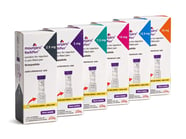

What is Xenical?
Xenical is a prescription-only weight loss medicine containing orlistat 120 mg. It is used to treat clinical obesity as part of a broader programme of reduced-calorie eating and increased physical activity, under medical supervision. It is not a standalone quick fix.
When comparing prescription weight loss tablets, Xenical stands out for its non-systemic mechanism of action. It is not an appetite suppressant, and it does not affect the central nervous system or how your brain relates to food. Instead, it acts directly in your digestive system to reduce the amount of fat your body absorbs from what you eat.
In the UK, Xenical has been licensed for use in adults since 1998 and has accumulated over two decades of real-world clinical evidence. It remains one of only a handful of treatments approved specifically for obesity management, alongside newer injectable medicines such as semaglutide and tirzepatide.
Important:
Xenical is not the same as Alli, the 60 mg orlistat capsule available over the counter. Xenical is double the strength and available by prescription only.
Key facts about Xenical
|
Active ingredient |
Orlistat |
|
Medicine type |
Gastrointestinal lipase inhibitor |
|
Use |
Weight loss treatment alongside a reduced-calorie, low-fat, balanced diet |
|
Form |
Capsules |
|
Typical dose |
120 mg, up to three times daily with meals |
|
Onset of effect |
Works locally with each fat-containing meal |
|
Prescription status (UK) |
Prescription-only medicine (POM) |
|
Manufacturer |
Roche |
How to buy Xenical in the UK
Whether you prefer ordering online or speaking to a healthcare professional in person, Xenical 120mg capsules can be obtained through different routes. Here’s what to expect from each option.
Prescription requirements in the UK
Xenical (orlistat) is a prescription-only medication in the UK. It cannot be purchased over the counter, and no legitimate pharmacy — online or high street — will dispense it without a valid prescription. This classification exists because orlistat 120 mg requires medical assessment to ensure it is being used safely and appropriately, and because its effectiveness depends on ongoing dietary guidance and monitoring.
If you see a website offering Xenical without any health consultation or prescription process, treat that as a significant red flag. Such sites are operating illegally and may be supplying counterfeit or substandard medicine.
Online consultation and prescription process
You do not need to visit your GP in person to get a Xenical prescription. Online providers registered in the UK can issue prescriptions following digital health assessments. This process is legal and regulated by both the Care Quality Commission (CQC) and the General Pharmaceutical Council (GPhC).
The typical process to buy Xenical online via Apomeds:
- Medical Assessment: Complete a medical questionnaire covering your weight, body mass index (BMI), relevant health conditions, current medications, and weight loss treatment history.
- Clinical Review: A certified prescriber reviews your answers — this is a genuine clinical review, not a rubber stamp. Not all patients are eligible, so a clinical evaluation is essential to confirm whether Xenical is a suitable treatment in each individual case. If there are contraindications or concerns, you may be declined or referred to your GP.
- Dispensing: If approved, a prescription is issued, and your medicine is dispensed and dispatched by a registered partner pharmacy in discreet, tracked packaging — usually within one to two working days.
|
Legitimate online pharmacies always require a health questionnaire before dispensing Xenical (orlistat). |
Where to buy Xenical in the UK
Xenical is available through three routes:
- NHS prescription via your GP: Your doctor can prescribe orlistat/Xenical 120mg capsules if you meet the clinical criteria. NHS funding varies by area; some Integrated Care Boards fund it routinely, others do not. Ask your GP surgery directly.
- High street pharmacy: Any registered pharmacy can dispense Xenical against a valid prescription.
- Registered online provider: The most convenient route for many people. Following an online consultation and prescription, Xenical is dispatched directly to you.
How does Xenical work for weight loss treatment?
Xenical works by blocking lipase enzymes in your digestive system. Lipases are responsible for breaking down dietary fat (triglycerides) so they can be absorbed through the gut wall into the bloodstream. When orlistat inhibits these enzymes, roughly one-third of the fat you eat passes through the digestive tract unabsorbed and is excreted in the stools.
In practical terms, if you eat a meal containing 30 grams of fat, Xenical causes around 10 grams of it to pass through your body without being absorbed. Over time, and across three meals a day, this reduction in fat calories helps you to lose weight — provided you control the rest of your diet appropriately.
|
The mechanism is entirely local — Xenical is not absorbed into the bloodstream in meaningful quantities. It stays in the gut, does its job, and is excreted. This limits systemic side effects but also means all of its effects (intended and otherwise) are gastrointestinal. |
This also explains why Xenical is not a weight loss pill for a passive treatment. If you eat a high-fat diet while taking orlistat, the unabsorbed fat has to go somewhere — and that produces the oily, urgent bowel symptoms the medicine is known for. Reduce dietary fat, and those side effects largely disappear. The drug effectively makes you feel the consequences of a high-fat meal immediately, which provides a behavioural incentive to stick to a lower-fat diet.
Who can use Xenical?
Designed for weight loss, Xenical is licensed for adults who meet specific BMI thresholds. The clinical eligibility criteria in the UK are:
|
BMI category |
Eligible for Xenical? |
|
BMI ≥ 30 (obesity) |
Yes, standard eligibility threshold |
|
BMI 28–29.9 with weight-related condition (e.g. type 2 diabetes, hypertension, raised cholesterol, sleep apnoea) |
Yes, the lower BMI threshold applies when comorbidities are present |
|
BMI < 28 with no weight-related conditions |
No, Xenical is not licensed for this group |
|
Under 18 years of age |
No, not licensed for use in children or adolescents |
|
Pregnant or breastfeeding |
No, must not be used |
Meeting the BMI criteria is a necessary starting point, but it is not the only consideration. Your prescriber will also review:
- Your medical history, including any history of kidney stones, gallbladder disease, eating disorders or other risk factors.
- Current medications that may interact with orlistat (particularly cyclosporine, amiodarone, anticoagulants such as warfarin, and antiepileptic medicines).
- Whether you are ready to commit to the dietary changes that make Xenical both effective and tolerable
You should only take Xenical if it has been prescribed following a medical assessment of your BMI and overall health status.
Who should not use Xenical?
|
⚠ Do not use Xenical 120mg if any of the following apply: You are pregnant, planning to become pregnant, or breastfeeding. You have chronic malabsorption syndrome (e.g. Crohn's disease with extensive bowel resection). You have cholestasis (bile flow obstruction). You have been told you have reduced kidney function — orlistat can increase the risk of oxalate kidney stones. You are under 18 years of age. You are taking cyclosporine — co-administration is not recommended due to reduced cyclosporine absorption. You are taking amiodarone — consult your cardiologist before starting orlistat. You have a history of anorexia or bulimia nervosa. |
How to use Xenical
The standard dose is one 120 mg capsule taken up to three times daily, with each main meal that contains fat. The key details:
- Best time to take Xenical: To achieve optimal results, it is recommended to take Xenical tablets immediately before, during, or up to one hour after a fat-containing meal. If a meal is missed or contains no fat, you do not need to take Xenical, as the medicine only works in the presence of dietary fat. If a dose is missed, patients are advised not to take a double dose of Xenical, but to continue with the next scheduled meal.
- Maximum dose: Three weight loss capsules per day, making up 360 mg of orlistat. Taking more does not improve results and increases side effects.
- Fat distribution: Spread your daily fat intake as evenly as possible across your three main meals. Keeping fat below 30% of total calorie intake per meal significantly reduces gastrointestinal side effects. Try not to exceed 15g of fat per meal.
- Fat-soluble vitamins: As Xenical reduces the absorption of fat, it also reduces the absorption of fat-soluble vitamins (A, D, E and K). Take a daily multivitamin supplement, ideally at bedtime, but at a different time to your Xenical dose.
Xenical does not require titration — you start at the full therapeutic dose from day one. There is no loading period.
How effective is Xenical 120mg?
Xenical is effective when used correctly — which means within a calorie-controlled, reduced-fat diet alongside regular physical activity. The clinical evidence is substantial.
Key findings from clinical trials and real-world data:
- In a landmark two-year trial (XENDOS), patients on orlistat 120 mg lost an average of 5.8 kg more than those on placebo, and the risk of progressing from pre-diabetes to type 2 diabetes was reduced by 37%. [4]
- A Cochrane review of 11 trials found that orlistat users lost approximately 2.9 kg more than placebo over 12 months — modest in isolation, but clinically meaningful when combined with improved blood pressure, cholesterol, and glucose control. [5]
- Long-term outcomes are significantly better for people who manage to lose at least 5% of their weight within the first 12 weeks — both in terms of sustained weight loss journey and associated health improvements.
- Xenical has been shown to reduce systolic blood pressure, improve LDL cholesterol levels, and lower HbA1c in patients with type 2 diabetes. [4]
The truth:
Xenical does not make you lose weight quickly and dramatically. Average losses are in the 5–10% body weight range over 12 months with good adherence. For someone weighing 100 kg, that is 5–10 kg — enough to produce meaningful reductions in cardiovascular risk and metabolic markers, but not the large losses seen with GLP-1 injectable medicines.
When results may appear
Some change in bowel habit (the clearest sign the medicine is working) tends to appear within the first one to two weeks. Measurable weight loss typically becomes apparent within four to six weeks of consistent use.
The formal assessment point in UK clinical practice is 12 weeks. If you have lost less than 5% of your initial weight by that point despite good adherence and dietary compliance, your prescriber will review whether to continue treatment. Continuing Xenical beyond 12 weeks without meaningful progress is not clinically recommended.
Xenical side effects
Patients considering weight loss tablets may benefit from Xenical due to its well-established safety profile when used as directed. The side effects of Xenical are almost entirely gastrointestinal — and almost entirely driven by dietary fat. This is a medicine which, to an unusual degree, allows you to control its side effects.
Very common (≥1 in 10) and common (≥1 in 100) Xenical side effects:
|
Side effect |
Practical tip |
|
Oily or fatty stools |
Eat less than 30% of calories from fat per meal |
|
Oily spotting on underwear |
Wear darker clothing initially; reduces as diet adapts |
|
Urgent need to open bowels |
Eat low-fat meals and time doses accordingly |
|
Flatulence (with oily discharge) |
Reducing fat intake eliminates this almost entirely |
|
Abdominal discomfort/cramping |
Usually improves within the first few weeks |
|
Soft or liquid stools |
Stay hydrated; avoid high-fat snacks between meals |
|
Headache |
Not fat-related; monitor and consult if persistent |
|
Low blood sugar (in diabetics) |
Glucose-lowering medication may need dose adjustment |
How to reduce Xenical side effects
The single most effective way to minimise Xenical's gastrointestinal side effects is to reduce dietary fat — particularly at any individual meal. Practical targets:
- Keep total fat intake to no more than 30% of daily calories
- Aim for no more than 15–20 grams of fat per main meal
- Avoid high-fat snacks (crisps, pastries, full-fat dairy, fried foods) entirely during treatment
- Do not take a dose if a meal is very low in fat or fat-free — it serves no purpose, and the capsule is wasted
Those who approach Xenical as a tool that rewards dietary discipline, rather than as a capsule that works regardless of what they eat, report far fewer troublesome side effects and better weight loss results. The medicine essentially enforces good dietary behaviour. Patients should contact a doctor straight away if they experience severe abdominal pain or persistent gastrointestinal symptoms while taking Xenical.
Drug interactions
Orlistat reduces fat absorption in the gut — and that same mechanism can reduce the absorption of medicines that are lipophilic (fat-soluble) or that are administered alongside dietary fat. The following interactions are clinically important in UK practice.
|
Medicine |
Severity of interaction |
What happens and what to do |
|
Ciclosporin |
Contraindicated: do not co-administer |
Orlistat significantly reduces ciclosporin absorption, which can cause transplant rejection or loss of immunosuppressive control. |
|
Warfarin / other anticoagulants |
Caution: monitor INR |
Orlistat reduces absorption of vitamin K (a fat-soluble vitamin). This can potentiate the anticoagulant effect of warfarin and increase bleeding risk. INR should be checked more frequently when starting, stopping, or changing the dose of Xenical. |
|
Amiodarone |
Caution: specialist review required |
Orlistat may reduce amiodarone absorption, potentially reducing its antiarrhythmic efficacy. Any patient taking amiodarone for a cardiac arrhythmia should have this reviewed by their cardiologist before starting Xenical. |
|
Antiepileptic medicines (e.g. valproate, lamotrigine, phenytoin) |
Caution: monitor seizure control |
Rare cases of loss of seizure control have been reported when orlistat was taken alongside antiepileptic drugs. Seizure frequency should be monitored closely. |
|
Levothyroxine |
Caution: separate doses |
Orlistat may reduce levothyroxine absorption, potentially reducing thyroid hormone levels. Take Xenical and levothyroxine at separate times of day — at least 4 hours apart — and monitor thyroid function. |
|
Acarbose |
Avoid combination |
Both acarbose and orlistat reduce carbohydrate and fat absorption, respectively. Combining them may cause additive gastrointestinal side effects or unpredictable metabolic effects. |
|
HIV antiretrovirals |
Caution: monitor viral load |
Orlistat may reduce the absorption of some antiretroviral medicines, potentially affecting HIV viral load control. |
|
Fat-soluble vitamins (A, D, E, K) |
Routine: take a supplement |
Orlistat reduces the absorption of all fat-soluble vitamins as a predictable pharmacological consequence. All patients should take a daily multivitamin supplement containing these vitamins, at a different time of day to their Xenical dose (ideally at bedtime). |
|
Oral contraceptives |
Precaution |
Although orlistat does not directly interact with contraceptive hormones, its secondary effects can reduce their effectiveness. If you experience severe or persistent diarrhoea while taking Xenical, the absorption of oral contraceptives may be significantly reduced. This is because the increased speed of gastrointestinal transit may prevent the medication from being fully absorbed into the bloodstream. If you have severe diarrhoea, you should use an additional barrier method of contraception (such as condoms) to prevent unintended pregnancy. This precaution should be maintained throughout the episode of diarrhoea and for at least seven days after the symptoms have completely resolved. |
Before you take Xenical, inform your doctor about any existing conditions or medications to avoid potential interactions.
What is more effective for losing weight: injections or Xenical?
Just to lose weight, such weight loss medications as the newer GLP-1 receptor agonist injections (semaglutide 2.4 mg weekly as Wegovy, or tirzepatide as Mounjaro) significantly outperform orlistat in clinical trials. But efficacy alone does not determine which treatment is right for a given patient.
|
Xenical (Orlistat 120 mg) weight loss capsules |
GLP-1 Weight Loss Injections (e.g. Wegovy, Mounjaro) |
|
Prescription-only oral capsule |
Prescription-only injection (weekly) |
|
Blocks ~30% of dietary fat absorption |
Suppresses appetite via gut hormone mimicry |
|
Weight loss over 24 months up to 10% with diet [1] |
Weight loss over 16 months 10-15% with Wegovy and 15-20% with Mounjaro [2, 3] |
|
Long safety record since 1998 |
Newer agents; long-term data still accumulating |
|
Side effects are mainly gastrointestinal; controllable through diet |
Side effects are mainly nausea and vomiting; they can be significant initially |
|
Generally lower cost; available as generic orlistat |
Higher cost; access via private prescribing |
|
Requires active dietary fat restriction to be tolerable and effective |
Works independently of specific dietary changes, though diet and exercise plans help |
|
Good option for motivated patients who want a non-injectable approach |
Better option where maximum weight loss is the clinical priority |
Bottom line
Xenical is a well-evidenced, lower-cost, orally taken option suited to patients who are motivated to change their diet. prefer non-injectable treatment, or who are not eligible for GLP-1 medicines.
Weight loss injections offer greater efficacy and are better suited where maximum weight loss is the clinical priority and the patient is comfortable with a weekly injection.
Neither is universally better — the right choice depends on individual health circumstances, preferences, and clinical goals. Speak to a prescriber about which approach fits your situation.

-
-
Sjöström L, Rissanen A, Andersen T, et al. Randomised placebo-controlled trial of orlistat for weight loss and prevention of weight regain in obese patients. Lancet. 1998;352(9123):167-172. https://pubmed.ncbi.nlm.nih.gov/9683204/
-
Wilding JPH, Batterham RL, Calanna S, et al. Once-weekly semaglutide in adults with overweight or obesity. N Engl J Med. 2021;384(11):989-1002. doi:10.1056/NEJMoa2032183
https://www.nejm.org/doi/full/10.1056/NEJMoa2032183 -
Jastreboff AM, Aronne LJ, Ahmad NN, et al. Tirzepatide once weekly for the treatment of obesity. N Engl J Med. 2022;387(3):205-216. doi:10.1056/NEJMoa2206038
https://www.nejm.org/doi/full/10.1056/NEJMoa22060384. -
Chakhtoura M, Haber R, Ghezzawi M, Rhayem C, Tcheroyan R, Mantzoros CS. Pharmacotherapy of obesity: an update on the available medications and drugs under investigation. EClinicalMedicine. 2023;58:101882. Published 2023 Mar 20. doi:10.1016/j.eclinm.2023.101882
-
Padwal RS, Rucker D, Li SK, Curioni C, Lau DCW. Long-term pharmacotherapy for obesity and overweight. Cochrane Database of Systematic Reviews 2003, Issue 4. Art. No.: CD004094. DOI: 10.1002/14651858.CD004094.pub2.
-


