
When you think of medication for erectile dysfunction (ED), you probably think of Viagra. Viagra is one of the best-known and most widely talked about treatments for erectile dysfunction. Though Viagra helps many men deal with both the physical and emotional impact of ED, there is a wide range of alternatives available, including prescription and non-prescription options. To help you find the best treatment for you, here's a breakdown of the best alternative to Viagra in the UK, evaluating how they measure up against Viagra in effectiveness, safety, speed, duration, accessibility, and more.
What makes a good erectile dysfunction treatment?
When it comes to finding erectile dysfunction medication, there are some key considerations you need to take into account, such as safety and effectiveness. Here are the essential components of any ED treatment and what to watch out for when choosing the best option for you.
Effectiveness
The effectiveness of an erectile dysfunction treatment is paramount - any medication needs to allow the user to achieve and maintain an erection sufficient for satisfactory sexual intercourse. Clinically, this is often measured using the International Index of Erectile Function (IIEF).
Phosphodiesterase-5 (PDE5) inhibitors - including sildenafil, tadalafil, avanafil and vardenafil - are the first-line therapy for ED for most men [1].
All available clinical data consistently demonstrate the effectiveness of PDE5 inhibitors in improving erections and overall sexual satisfaction in men with ED [2].
The effectiveness of different medications varies slightly depending on factors such as onset, duration, and patient characteristics, but research shows high-treatment success rates of around 89% across all available prescription PDE5 inhibitors [1].
Safety
Any treatment for ED needs to be well-tolerated and safe for the individual user. Questions such as how often is Viagra safe to take are common, and the answer depends on overall health, dosing, and medical supervision. PDE5 inhibitors are generally safe for most men, but they are contraindicated for individuals with certain medical conditions, such as unstable cardiovascular disease, recent heart attack or stroke, or those taking specific medications, such as nitrates for angina, which can cause dangerous interactions.
The main safety concern with PDE5 inhibitors is vasodilation. Viagra and alternative PDE5 inhibitor drugs lower blood pressure by enhancing nitric oxide (NO) signalling in penile tissue, as well as in the wider vascular system. The most serious safety risk is for men who are on nitrate therapy, as there is an increased risk of severe hypotension [3].
For individuals with cardiovascular disease, non-oral treatments such as topical alprostadil or mechanical vacuum devices are generally safer as they avoid systemic vasodilation and reduce the risk of complications.
Speed of action
The time it takes for an erectile dysfunction treatment to work matters for many men. Speed of onset can have a big impact on sexual satisfaction, especially as many people value spontaneity in their sexual relationships.
For PDE5 inhibitors to be effective, a sufficient concentration of the drug must be present in the bloodstream. This enables enhanced NO signalling in the penile tissue, supporting the hemodynamics of an erection during sexual stimulation. As a result, onset time can significantly influence user experience and satisfaction.
The speed at which erectile dysfunction medication starts working is largely determined by how quickly the medication is absorbed into the bloodstream. This process is influenced by pharmacokinetics, especially the time to peak plasma concentration (Tmax); this is when the highest concentration of the drug is present in the body after a dose is taken.
For example, sildenafil reaches peak plasma concentration in about 60 minutes when it’s taken on an empty stomach. However, its absorption can be significantly delayed and reduced by food intake, especially high-fat meals. For this reason, urologists and clinicians advise patients to take sildenafil on an empty stomach or at least two hours after a large meal to optimise its effectiveness [1].
Avanafil and vardenafil reach peak plasma concentrations relatively quickly (approximately at 30-40 minutes after dosing), which is associated with a faster onset of action compared with some other PDE5 inhibitors. This means they may be more suitable for men who prefer flexibility and less pressure on sexual activity with their partner or those who find planning when to take medication difficult [1].
Duration

For many men, how long treatment for erectile dysfunction lasts can make a big difference in how good it is. This is because it determines sexual freedom and flexibility for both the individual and their partner.
The so-called duration of action of erectile dysfunction medications is primarily determined by the drug’s half-life, which is the amount of time it takes for half of the active drug in the bloodstream to be eliminated. This pharmacological property affects how long medication continues to enhance blood flow in response to sexual stimulation [4].
Here are some comparisons of popular licensed medications for ED:
- Sildenafil: Typically provides a therapeutic window of 4-6 hours (with a terminal half-life of 3–5 hours). During this time, men may experience improved sexual performance and prolonged erections when they experience sexual stimulation, but the effectiveness gradually reduces as drug levels decrease in the bloodstream.
- Vardenafil: This medication has a similar duration profile to sildenafil, lasting between 4-6 hours (with an elimination half-life of 4–5 hours). Its pharmacokinetic behaviour is also comparable to sildenafil, although some patients report slightly stronger or more consistent responses depending on individual metabolism and response.
- Avanafil: Avanafil has a duration of action that's comparable to sildenafil, typically lasting 4–6 hours, with a plasma half-life of around 3–5 hours
- Tadalafil: Unlike other treatments, Tadalafil (Cialis) stands apart from most PDE5 inhibitors thanks to its significantly longer half-life of approximately 17.5 hours. This means tadalafil can remain active for up to 36 hours after a single dose. The duration of action may also vary depending on the Tadalafil dosage prescribed. This doesn't mean an erection lasts for the entire period, but that the body is primed to respond more easily when sexually aroused during that time. For many people, this longer timeframe helps to reduce performance anxiety and allows sexual activity to feel more natural, relaxed, and less scheduled.
Accessibility
Access to medication to treat erectile dysfunction has improved significantly over the past decade in the UK, especially with the availability of treatment outside of traditional GP routes [5].
You can now access treatment through several different methods — depending on your medical profile, preferences, and the level of clinical supervision you might require.
Here are the most common options for accessing medication for ED:
- GP prescription: Most men access treatment for erectile dysfunction through a GP prescription. A GP can assess any underlying health conditions, review medications, and determine which PDE5 inhibitors or other treatments are appropriate. This route is especially important for men who may have cardiovascular risk factors, diabetes, or other chronic conditions that could influence treatment.
- Specialist clinics: Specialist urology clinics are another option for accessing treatment, particularly for men with more complex or treatment-resistant ED. Urologists can offer advanced diagnostic assessments - such as hormone testing - and additional treatment options, including injections, vacuum devices, or surgical interventions if appropriate.
- Community pharmacies: Community pharmacies play a role in supplying non-prescription erectile dysfunction treatments following consultation with a pharmacist. Pharmacists can assess suitability, check for contraindications, and provide guidance on the safe use of medications.
- Online pharmacies and platforms: Regulated online pharmacies and digital health platforms have become a major access point for erectile dysfunction pills in the UK. They offer a fast, safe, and discreet way to access treatment for ED, allowing eligible people a way to receive treatment conveniently and privately, without needing to visit a doctor or specialist in person.
What is the alternative to Viagra: prescription vs non-prescription options
In the UK, there are both prescription and non-prescription options available for the treatment of ED.
Prescription treatments are the main medical therapy for many men with erectile issues. These generic medications are typically prescribed by a clinical professional who evaluates certain factors, including any cardiovascular risk, current medications, hormonal profile, and potential underlying causes of erectile dysfunction, such as diabetes or dyslipidaemia.
Non-prescription options, including pharmacist-supplied sildenafil like Viagra Connect, topical treatments, and mechanical devices, offer more flexibility for men who prefer more discreet or faster access to treatment or who don't require specialist care.
Here are the main differences between prescription and non-prescription treatment options - and how to choose the treatment that best matches your medical background, lifestyle, and goals.
Prescription options of alternative treatments for ED

Prescription treatments for ED primarily belong to a class known as phosphodiesterase type 5 inhibitors (PDE5 inhibitors).
These medications enhance the body’s natural erectile response by improving the flow of blood to the penile tissue during sexual stimulation. Each medication has specific characteristics that can influence its speed, duration, side effects, and more. Here's an overview of the main types of prescription treatments for ED [1]:
Sildenafil
Sildenafil (the active ingredient in Viagra) is a potent and selective inhibitor of cGMP-specific phosphodiesterase type 5 (PDE5), which causes relaxation of smooth muscle in the corpus cavernosum. Sildenafil citrate helps to restore the body's natural erectile response to sexual stimulation for up to six hours. For many men, it’s an effective treatment for ED.
Another key advantage of Sildenafil is that it’s available in a variety of different forms — specifically developed to improve convenience, effectiveness, and patient preferences. These alternatives can be useful for men who have difficulty swallowing tablets or who want a more discreet method of taking the medication.
One example is Viagra orodispersible film, which is contains the same active ingredient but is designed to dissolve on the tongue without the need for water. This form of sildenafil is partially absorbed through the oral mucosa and then swallowed as it dissolves, making it convenient for men who want a more discreet dosing method, such as when travelling or in social settings.
However, sildenafil has some limitations. Absorption can be delayed by high-fat meals, which reduces the predictability of the medication for some patients. Sildenafil is also more likely to cause visual disturbances than some newer PDE5 inhibitors due to mild inhibition of PDE6 in the retina.
Tadalafil
Cialis (active ingredient tadalafil) is another popular medication that differs structurally from sildenafil. Although it works through the same fundamental mechanism of PDE5 inhibition, tadalafil stays active in the body for much longer (up to 36 hours), allowing a broader window for sexual activity.
One of the other unique benefits of Cialis is that it can be prescribed as a daily low-dose treatment — typically 2.5 mg or 5 mg taken once per day. Daily tadalafil maintains stable plasma concentrations, allowing men to engage in sexual activity without needing to time their medication use around their sexual activity. Over time, this continuous exposure may also improve endothelial function and vascular responsiveness.
This approach can be especially helpful for men who have frequent sexual activity or who prefer to be spontaneous. It may also benefit men with diabetes, a group in which endothelial dysfunction is common, and the response to medication to treat ED can sometimes be reduced.
Avanafil
Avanafil (Spedra) is considered a second-generation PDE5 inhibitor, designed to reduce certain side effects that are common with other treatments for ED.
One of the distinguishing pharmacological features of avanafil is its higher specificity for PDE5 compared with other related enzymes in the body.
This increased selectivity reduces off-target inhibition of PDE6, which is present in retinal tissue and associated with visual disturbances. As a result, avanafil may produce fewer visual side effects in some patients compared with sildenafil.
Vardenafil
Vardenafil (Levitra) is similar to sildenafil, but it's slightly more potent in terms of PDE5 inhibition.
Vardenafil has been widely studied in men with diabetes-related ED, where vascular and nerve damage can make treatment more challenging. Clinical studies show that vardenafil significantly improves erectile function in this group at doses such as 10 mg once daily or 5 mg twice daily. [6].
PDE5 Inhibitors in numbers
|
Erectile dysfunction tablets |
Onset of Action / Duration / Clinical Effectiveness |
|
Branded and generic Viagra (Sildenafil) |
Onset: ~30–60 minutes (may be delayed by a high-fat meal). |
|
Cialis + generic version Tadalafil |
Onset: ~30–60 minutes. |
|
Vardenafil (Levitra) |
Onset: ~25–60 minutes. * |
|
Avanafil (Spedra) |
Onset: ~15–30 minutes (fastest onset). |
* Although studies have shown that vardenafil begins to work in some people after just 10 to 15 minutes.
** However, clinical studies show that vardenafil can remain effective in some people for 8 to 12 hours.
Over-the-counter Viagra alternatives
Here are the most common non-prescription treatments for ED:
Viagra Connect
Viagra Connect is the main over-the-counter oral treatment for ED available in the UK. It contains the active ingredient as prescription Viagra - 50 mg of sildenafil - and works by inhibiting the phosphodiesterase type 5 (PDE5) enzyme [5].
The medication typically begins working within 30 to 60 minutes, and its effects generally last for around 4 hours.
Unlike prescription sildenafil, Viagra Connect is available after a consultation with a pharmacist to make sure it's appropriate and safe for someone to take. A pharmacist will assess your cardiovascular risk, current medications (especially nitrates or certain antihypertensives), and any underlying conditions that might require medical evaluation.
This product is a convenient and safe medication for men who want to try a clinically proven treatment without scheduling a doctor’s appointment or seeing a specialist [5].
Topical gels
Topical gels are another form of medication for ED that are generally available without a traditional prescription, depending on the product. This treatment usually contains the active ingredient alprostadil, a prostaglandin E1 analogue that works through a different mechanism compared to PDE5 inhibitors. Alprostadil directly stimulates vasodilation in penile blood vessels to improve blood flow and allow the user to get and maintain an erection without taking Viagra.
When it’s applied as a topical gel or cream to the urethral opening or penile tissue, the medication is absorbed locally and can begin working within approximately 5 to 30 minutes. Systemic exposure is typically lower than with oral medications, which can make this option suitable for men who can't take PDE5 inhibitors due to drug interactions or chronic conditions.
Clinical studies have shown that topical alprostadil can significantly improve symptoms of erectile dysfunction - men were approximately 73% less likely to continue having symptoms compared to placebo - and is generally safe. Proper application technique and dosing are important to maximise effectiveness and reduce adverse effects [7].
Mechanical devices
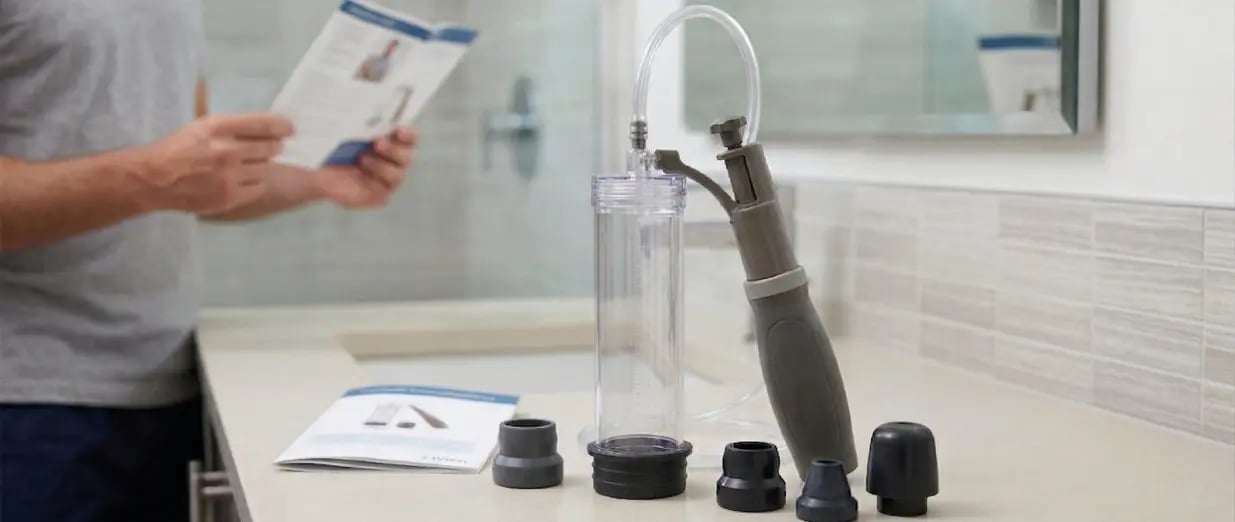
There are also mechanical options available to combat ED, especially vacuum erection devices (VEDs) or 'penis pumps', which are widely available without a prescription and are supported by a strong clinical evidence base.
These devices work by creating negative pressure around the penis, drawing blood into the corpora cavernosa to allow them to get an erection. A constriction ring is then placed at the base of the penis to maintain venous occlusion and allow the user to maintain an erection during intercourse to improve sexual performance.
One of the main advantages of mechanical devices like penis pumps is that they don't rely on systemic medication. This means they're suitable for men who can't take PDE5 inhibitors or who have complex medical conditions like advanced cardiovascular disease. Mechanical devices are also commonly used in penile rehabilitation programs after prostate surgery, where maintaining circulation to the penis may help preserve erectile capacity over time.
Success rates are relatively high, with some studies reporting that 96% of patients endorsed their ability to get an erection with the device and have sexual intercourse, and 100% indicated they would recommend the device to others, though some men find the devices less convenient than oral medication [8].
Fast-acting alternatives to Viagra
If speed is a priority, avanafil (Spedra) is generally the fastest-acting PDE5 inhibitor, with effects possible in as little as 15–30 minutes. Vardenafil (Levitra) may also work slightly quicker than sildenafil for some men.
Topical alprostadil is another fast-acting option. Applied directly to the penis, it works locally by increasing blood flow and can take effect within about 5–30 minutes.
Longest-lasting alternative to Viagra
One of the longest-lasting Sildenafil alternatives is Tadalafil (Cialis), which can remain effective for up to 36 hours due to its longer half-life. This extended window has earned it the nickname "the weekend pill," as a single dose taken on Friday evening can provide support through Sunday.
Tadalafil is also available as a daily low-dose option (2.5mg or 5mg), which contains the same active ingredient and maintains constant levels in the body for continuous 24/7 readiness without needing to time doses before sexual activity, making it the ultimate choice for spontaneity and frequent sexual activity.
What is the Viagra alternative without side effects?
Unfortunately, there is no medication to treat erectile dysfunction that is completely free of potential side effects. As they all work through similar mechanisms, PDE5 inhibitors share comparable to Viagra side effects, such as headaches, facial flushing, nasal congestion, visual disturbances and indigestion.
However, the severity and frequency of side effects vary between individuals and medications. Some men find that switching from one PDE5 inhibitor to another—such as from sildenafil to tadalafil or avanafil—reduces bothersome side effects whilst maintaining effectiveness.
- Low-dose sildenafil: Some men tolerate sildenafil better when starting at a 25 mg dose rather than 50 mg or 100 mg. Decreased doses reduce the degree of systemic vasodilation while still improving penile blood flow in many individuals, helping to produce reliable erections with fewer adverse effects.
- Tadalafil daily dosing: Tadalafil is often better tolerated in men who experience side effects with sildenafil because it has greater selectivity for the PDE5 enzyme and a smoother pharmacokinetic profile. Daily tadalafil at 2.5 mg or 5 mg maintains stable drug levels rather than producing a sharp peak concentration, which may reduce the likelihood of headaches and flushing in some individuals.
- Avanafil: Avanafil is a PDE5 inhibitor that was designed with higher receptor selectivity, meaning it targets PDE5 more precisely and has less interaction with related enzymes such as PDE6. This means avanafil may cause fewer side effects compared with sildenafil, especially visual side effects.
Non-medication alternatives like a penis pump or vacuum pump, pelvic floor exercises, lifestyle modifications (weight loss, exercise, smoking cessation), and psychological therapy produce fewer or no pharmaceutical side effects, though they require more effort and may be less immediately effective than medications. If you're experiencing ED, it's important to work with your doctor to find the treatment approach that offers the best balance of effectiveness and tolerability for your individual situation.
Who should avoid Viagra?
There are several cases where Viagra or other sildenafil-containing medications shouldn’t be used because the risks may outweigh the benefits. Here are some of the most common cases [1]:
- Concurrent nitrate therapy: Men who take nitrate medications such as glyceryl trinitrate (GTN), isosorbide mononitrate, or isosorbide dinitrate for angina or other heart conditions should not take sildenafil. Both nitrates and PDE5 inhibitors increase NO signalling and cause vasodilation. When combined, they can produce a sudden and dangerous drop in blood pressure called severe hypotension, which may lead to fainting, a heart attack, or a stroke.
- Severe hypotension or uncontrolled hypertension: Individuals with very low baseline blood pressure or uncontrolled high blood pressure are at increased risk of hemodynamic instability when using sildenafil.
- Recent myocardial infarction: Men who have experienced a heart attack within the past few months are typically advised to avoid sildenafil until their cardiovascular stability has been fully assessed. Sexual activity increases cardiac workload, and clinicians usually evaluate cardiac risk before resuming ED treatment.
- Recent stroke: Patients who have had a recent stroke are generally advised to delay the use of PDE5 inhibitors until neurological and cardiovascular recovery has progressed and a clinical professional has confirmed that sexual activity is safe.
- History of NAION (Non-arteritic Anterior Ischemic Optic Neuropathy): NAION is a rare condition that causes sudden vision loss due to reduced blood to the optic nerve. Because sildenafil affects vascular dynamics, patients with a prior history of NAION may be at increased risk of recurrence and are typically advised to avoid the medication.
In some situations, sildenafil may still be used in certain cases, but only after careful medical assessment and dose adjustment. Here are some examples where sildenafil should be used with caution:
- Severe liver impairment: Sildenafil is metabolised primarily in the liver through the cytochrome P450 enzyme system. Significant liver disease can slow drug metabolism, resulting in higher circulating levels and increased risk of side effects. Lower starting doses are often recommended.
- Advanced renal disease: Kidney impairment can alter drug clearance and increase systemic exposure to sildenafil. Patients with advanced kidney disease may require dose adjustments and closer monitoring when using PDE5 inhibitors.
- Retinitis pigmentosa: This rare genetic eye disorder affects photoreceptor function in the retina. PDE5 inhibitors may interact with related enzymes in the retinal tissue and could worsen visual disturbances in patients with this condition.
If you should avoid taking Viagra, a reduced dosage or topical treatment may be a better option. Consult a healthcare professional to understand which other treatments are most appropriate for you — including your medical profile, medications, and lifestyle.
Natural alternative to Viagra: what actually works?

Unlike prescription medications, many alternative treatments, like herbal remedies or nutritional supplements, have limited clinical evidence to support their effectiveness. But there are a few evidence-based natural remedies that may act as a treatment for ED in some men.
L-arginine
L-arginine is an amino acid that acts as an essential substrate for the synthesis of nitric oxide (NO), the key molecule responsible for initiating vasodilation in penile blood vessels to increase blood flow to the penis during sexual arousal. L-arginine may help improve endothelial function and support blood flow by increasing NO production in the body.
A study of the effects of L-arginine on penile erection in patients with vasculogenic ED found that it significantly increased scores in the overall cohort when taken as an oral dose of 6 g per day for 3 months, including in patients with mild–moderate and severe vasculogenic ED [9].
Panax ginseng
Panax ginseng - also known as Korean ginseng, Asian ginseng, or red ginseng - has been studied for its potential positive effects on sexual health. Ginseng was significantly associated with improvement in ED compared to controls in several studies, as well as improvements in orgasmic function, sexual desire, satisfaction with intercourse, and serum testosterone levels [10]. The proposed mechanisms include improved NO synthesis, enhanced blood flow, and potential hormonal modulation in men who take ginseng supplements.
Citrulline
Citrulline is another amino acid involved in NO production. In the body, citrulline is converted into arginine, which contributes to NO synthesis and improved vascular dilation. Some improvements in ED have been reported with citrulline intake; however, more research is needed to confirm the effectiveness of citrulline in treating ED [11].
It’s important to note that natural alternatives and supplements aren't regulated to the same standards as prescription medications in the UK, so they may vary widely in terms of dosage, contents, and clinical effectiveness. It's a good idea to seek further advice from a healthcare professional before using dietary supplements and alternative treatments.
Horny goat weed
Horny goat weed is a traditional herbal supplement sometimes marketed as a natural alternative for ED. Its active compound icariin has been shown to have mild PDE5-inhibiting effects, meaning it may support circulation to penile tissue and allow the user to get an erection, but clinical evidence in humans is limite,d and the concentration of active ingredients can vary widely between products.
Foods that support erections
Some foods also support vascular health and sexual function as part of a balanced diet — but they're not considered effective as an alternative to Viagra compared to other medications such as PDE5 inhibitors.
Here are some foods that may support your sexual health:
- Watermelon: Watermelon has antimicrobial, antioxidant, antidiabetic, anti-inflammatory, and antihypertensive properties that may contribute to its use in treating ED. It's also rich in citrulline. Some studies suggest watermelon is effective for reducing ED, improving semen quality, enhancing testicular redox status, and improving gonadotropin secretion. These activities have been linked to watermelon’s high vitamin phytochemical content, such as phenols and certain flavonoids that contribute to its antioxidant properties, as well as its citrulline content, which is key for increasing NO production [12].
- Dark chocolate: Cocoa seeds are a rich source of phenolic antioxidant flavonoids, including catechins, epicatechins, quercetin, luteolin, vitexin, and phenolic acids. Epicatechins are primarily responsible for their beneficial impact on the vascular endothelium by regulating NO production. Cacao has also been shown to improve insulin sensitisation and improve immune response, as well as being beneficial in nerve injury, cognitive function, and mood elevation. While research on dark chocolate as a natural alternative to Viagra is limited, studies have found that consuming cacao and pomegranate supplements was effective at improving erectile function, enhancing sexual function, increasing libido, and improving psychological well-being in men aged 40 to 70 [13].
- Pomegranate: Pomegranate is a potent source of active antioxidant phytochemical compounds like ellagic acid, gallic acid, quercetin, myricetin, and flavonoids such as anthocyanidins, cyanidins, luteolin, and pelargonidins. Pomegranate juice is reported to enhance nitric oxide levels in the body and has beneficial effects on male sexual health and fertility, including improved blood flow to the penis, smooth muscle relaxation, and erectile activity against oxidative stress. A clinical study demonstrated improved sexual function in pomegranate juice-supplemented individuals compared to placebo [13, 14].
Non-medication options for ED
In addition to medications and supplements, there are also several non-medical treatments available for ED. These options may be useful for men who can't take PDE5 inhibitors or who prefer a non-medical approach. Here are some of the most common options.
What lifestyle adjustments can be an alternative to Viagra for men?

Lifestyle modifications can significantly improve erectile function and may reduce or eliminate the need for medication, particularly in men with mild to moderate arteriogenic ED.
Physical activity and pelvic floor exercises
Regular exercise (at least 150 minutes of moderate aerobic activity weekly) improves cardiovascular health and blood flow, with studies showing it can be as effective as medication in some cases.
Pelvic floor exercises - also known as Kegel exercises - target the muscles that support penile erection. Strengthening these muscles improves venous occlusion and can enhance your ability to maintain an erection that's rigid enough for sexual intercourse. A review examining the effectiveness of pelvic floor muscle training in men to treat ED and premature ejaculation found the treatment to be effective in the management of erectile issues [15].
Healthy weight
Weight loss in overweight or obese men can improve hormones, reduce inflammation, and enhance vascular function.
Dietary improvements, particularly adopting a Mediterranean-style diet rich in fruits, vegetables, whole grains, fish, and healthy fats, support cardiovascular and erectile health. Whilst lifestyle changes take longer to show results than medications (typically 3-6 months), they address underlying causes, improve overall health, and can produce lasting benefits without side effects.
Quit smoking and avoid heavy drinking
Quitting smoking is a crucial step towards improving erectile function. Quitting can improve erectile issues within weeks to months by restoring blood vessel health.
Limiting alcohol to moderate levels (no more than 14 units weekly) may also prevent alcohol-related ED.
Mental health
ED doesn't always have a purely physical cause. Psychological factors such as anxiety, relationship stress, depression, or past negative sexual experiences can play a significant role in erectile issues.
Cognitive behavioural therapy (CBT) is shown to be effective in improving mental health outcomes and treating psychogenic ED by addressing thought patterns, anxiety responses, and behavioural conditioning related to sexual performance [16].
Stress reduction through meditation, mindfulness, adequate sleep (7-9 hours nightly), and work-life balance helps lower cortisol and improve sexual health.
A combined approach using both psychosexual therapy and medication can produce better outcomes than medication alone.
What if Viagra did not work for me?
It's relatively common to feel like Viagra hasn't worked for you, especially during the first few attempts -- but this doesn't necessarily mean the medication is ineffective or won't work long-term.
Common reasons Viagra may not work
- Incorrect timing: Taking it too close to sex or after a heavy meal can delay absorption. Sildenafil usually needs around 30–60 minutes to work.
- No sexual stimulation: Viagra enhances the natural response to arousal but it doesn't cause an automatic erection unless you're sexually stimulated.
- Severe vascular disease: Advanced diabetes, hypertension or atherosclerosis can reduce blood flow and limit response.
- Low testosterone: Reduced testosterone may lower libido and response to treatment.
- Anxiety or stress: Anxiety and stress can interfere with the body’s erectile response despite medication.
How to improve the response to medication for erectile dysfunction
Several evidence-based strategies can enhance your response to medication, depending on why you're experiencing erectile dysfunction [1, 17]:
Try multiple attempts: Clinical guidelines recommend trying PDE5 inhibitors at least 6-8 times before considering them ineffective. Success requires correct timing, administration, and for the user to be sexually aroused.
Optimise cardiovascular health: Weight loss, regular exercise, smoking cessation, and better blood sugar control improve the nitric oxide pathway that PDE5 inhibitors rely on and increase blood flow, enhancing medication effectiveness over time.
Check testosterone levels: If symptoms suggest hormonal imbalance, testing and possible testosterone replacement therapy may improve both sexual desire and medication responsiveness.
Try a different PDE5 inhibitor: Individual variations in metabolism mean some men respond better to medications such as tadalafil, vardenafil, or avanafil than sildenafil. Switching medications can significantly improve outcomes.
Consider psychological support: Studies show combining CBT with PDE5 inhibitors produces superior results compared to medication alone, particularly when psychological factors contribute to ED. [16]
Penile implants as the last surgical solution
For men with refractory ED that doesn't respond to oral medication, intracavernous injections (ICI), or alternative treatments, penile implants may be recommended. Inflatable Penile Prostheses (IPP) are the most commonly used surgical treatment for severe ED, allowing men to achieve an erection mechanically through a three-piece device implanted inside the penis.
This surgery involves the implantation of a medical device and is irreversible, so penile implants are typically reserved for men with severe, treatment-resistant ED who have not responded to other therapies. There's also some risk of complications with this treatment, including device infection and mechanical failure, which require medical attention [18].
Which Viagra alternative is best for you?
Choosing the best treatment for you depends on a combination of factors, including medical background, your lifestyle, and relationship status, as well as your personal preferences.
Here are some key factors to consider [1, 2]:
- Age: Age can play a significant role in determining which treatment is right for you. For example, older men more commonly develop ED due to vascular changes, including endothelial dysfunction and atherosclerosis, which reduce the flow of blood to the penis. These patients may respond well to standard PDE5 inhibitors such as sildenafil or tadalafil.
- Cardiovascular risk: ED and cardiovascular disease share the same underlying pathology. Some treatments, such as PDE5 inhibitors, are generally safe for people with cardiovascular disease but are contraindicated with nitrate therapy. For higher-risk patients, it may be necessary to take smaller doses or use non-pharmacological treatments such as mechanical devices.
- Frequency of intercourse: The frequency of sexual activity plays an important part in medication choice for ED. If you expect to have occasional sexual activity, you might prefer more on-demand medications such as sildenafil or avanafil, or if you have more regular sexual activity, you may benefit from longer-acting options like tadalafil, which can remain effective for up to 36 hours.
- Relationships: Relationship dynamics can also influence treatment for ED. If you're in a long-term relationship, you and your partner might prefer a treatment option that doesn't require careful planning around when you take the medication. For men who are dating or who experience performance anxiety, faster-acting medications might be more suitable, providing peace of mind that the medication will have a reliable response [19].
- Diabetes: Men with diabetes often suffer from a combination of vasculopathy and autonomic neuropathy, which can reduce the efficacy of oral meds. In these cases, combining maximal dose PDE5 inhibitors with strict glycemic control and lifestyle interventions is essential.
- Medication profile: Existing medications can significantly influence which treatments are safe for you. For example, nitrates used for angina and certain alpha-blockers can interact with PDE5 inhibitors and cause dangerous drops in blood pressure. If you're on any existing medication, a thorough review of your medication can help to identify which treatment is safe for you to use.
Frequently asked questions
Here are some frequently asked questions on common medications and other erectile dysfunction treatments.
Is Viagra Connect as strong as prescription Viagra?
Viagra Connect contains 50 mg of sildenafil, the same active ingredient and strength as prescription Viagra 50 mg, so it is equally strong and works in the same way. The only difference is that it can be purchased from pharmacies without a prescription following a brief consultation with a pharmacist, whereas higher (100 mg) and lower (25 mg) doses require a prescription.
Are natural alternatives safe?
Many natural supplements are generally safe for healthy individuals but their safety profile is less predictable than that of regulated medications. Unlike regulated pharmaceuticals, natural Viagra alternatives like supplements aren't required to undergo the same level of clinical testing for efficacy and safety.
Some supplements - such as L-arginine, Panax ginseng, and citrulline - have modest evidence for improvements in male erections. However, they have not been studied as extensively as other pharmaceutical treatments for ED.
Another safety concern is that some products marketed as natural Viagra may contain active ingredients or compounds that pose significant health risks, especially in people taking nitrates or other interacting medications. It's generally advised to consult a health professional before taking natural Viagra alternatives to see if they're right for you.
Can I combine supplements with ED medication?
It's a good idea to consult a medical professional before combining supplements with prescription ED medications because interactions can occur at both the pharmacodynamic and cardiovascular levels. Many supplements that claim to improve erections work through pathways that affect nitric oxide signalling or vascular dilation. When combined with PDE5 inhibitors, this may lead to excessive vasodilation, which could increase the risk of side effects such as headaches, dizziness, or flushing.
For example, supplements like L-arginine or citrulline increase nitric oxide production. When taken with PDE5 inhibitors, the combined effect of any active ingredients may increase vasodilation, which may be harmful.
Conclusion
Addressing erectile dysfunction is a highly individualised process. While Viagra is the most recognised treatment, it is by no means the only option. The optimal therapeutic approach depends on a complex interplay of vascular health, cardiovascular risk, hormonal balance, and psychological factors.
For the majority of men, PDE5 inhibitors (Sildenafil, Tadalafil, Vardenafil, and Avanafil) remain the first-line therapy due to their proven safety and predictability. However, for those with contraindications or sub-optimal responses, second-line therapies such as topical alprostadil, Vacuum Erection Devices (VED), or surgical options provide effective alternatives.
If you are experiencing ED, the most important step is to consult a urologist or healthcare practitioner. This ensures not only that you receive the most effective treatment but also that any underlying cardiovascular or metabolic conditions are identified and managed for your long-term health.
Sources
- Smith WB, McCaslin IR, Gokce A, Mandava SH, Trost L, Hellstrom WJ. PDE5 inhibitors: considerations for preference and long-term adherence. International Journal of Clinical Practice. 2013;67(8):768-780. https://onlinelibrary.wiley.com/doi/full/10.1111/ijcp.12074
- Yuan J, Zhang R, Yang Z, et al. Comparative Effectiveness and Safety of Oral Phosphodiesterase Type 5 Inhibitors for Erectile Dysfunction: A Systematic Review and Network Meta-analysis. European Urology. 2013;63(5):902-912. https://pubmed.ncbi.nlm.nih.gov/23395275/
- Kloner RA, Goldstein I, Kirby MG, Parker JD, Sadovsky R. Cardiovascular Safety of Phosphodiesterase Type 5 Inhibitors After Nearly 2 Decades on the Market. Sexual Medicine Reviews. 2018;6(4):583-594. https://academic.oup.com/smr/article-abstract/6/4/583/6830896?login=false
- Hartmut Porst, Katja Hell-Momeni, Hartwig Büttner. Chronic PDE-5 inhibition in patients with erectile dysfunction – a treatment approach using tadalafil once-daily. Expert opinion on pharmacotherapy. 2012;13(10):1481-1494. https://www.tandfonline.com/doi/abs/10.1517/14656566.2012.693162
- Symonds T, Coyne KS, Margolis MK, Schnetzler G. The Ability of the General Male Public to Assess Their Suitability to Take 50‐mg Sildenafil: An Assessment of the Comprehension of Patient Information Materials via Internet Survey. The Journal of Sexual Medicine. 2011;8(7):2038-2047. https://academic.oup.com/jsm/article-abstract/8/7/2038/6980163
- Abdellatif AE, Abdelbary AM, Ragheb AM, et al. Effect of vardenafil in long-standing diabetic patients comparing different doses regarding erectile dysfunction, testosterone level and partner satisfaction. Arab Journal of Urology. 2025;24(1):75-81. https://www.tandfonline.com/doi/full/10.1080/20905998.2025.2526978#abstract
- Papadopoulos I, Maksim Tishukov, Ioannis Sokolakis, Ioannis Katafigiotis, Nikolaos Pyrgidis. The effect of topical and intraurethral alprostadil on erectile function: A systematic review and meta‐analysis. Andrology. 2025;(3). https://onlinelibrary.wiley.com/doi/full/10.1111/andr.70025
- Wang R, Martins FE, Ralph D, et al. Vacuum erectile devices for erectile dysfunction: recommendations from the 5th international consultation on sexual medicine. Sexual Medicine Reviews. Published online January 26, 2025. https://academic.oup.com/smr/article/13/2/172/8016502
- Menafra D, de Angelis C, Garifalos F, et al. Long-term high-dose l-arginine supplementation in patients with vasculogenic erectile dysfunction: a multicentre, double-blind, randomized, placebo-controlled clinical trial. Journal of Endocrinological Investigation. 2022;45(5):941-961. https://link.springer.com/article/10.1007/s40618-021-01704-3?crsi=662497033&cicada_org_src=healthwebmagazine.com&cicada_org_mdm=direct
- Ho CY, Hsu CH, Chien TJ. Herbal dietary supplements for erectile dysfunction: A systematic review and meta-analysis of randomized-controlled trials. Journal of Traditional and Complementary Medicine. 2025;16(1):109-120. https://www.sciencedirect.com/science/article/pii/S2225411025000768
- Tsujimura A. Functionality of Supplements and Anti-aging: Functionality of Supplements—Male Medical. Anti-Aging Medicine. Published online 2024:467-469. https://link.springer.com/chapter/10.1007/978-981-97-8514-8_114
- Rotimi DE, Asaleye RM. Impact of Watermelon (Citrallus lanatus) on Male Fertility. JBRA Assisted Reproduction. Published online 2022. https://pmc.ncbi.nlm.nih.gov/articles/PMC10718552/
- Srivastava MK, Singh G, Kodur RR, Yalamanchi A. A Combination of Punica granatum Fruit Rind and Theobroma cacao Seed Extracts Enhances Sexual Function in Aging Males in a Randomized, Double-blind, Placebo-controlled Study. International Journal of Medical Sciences. 2025;22(2):383-397. https://pmc.ncbi.nlm.nih.gov/articles/PMC11704686/
- Forest CP, Padma-Nathan H, Liker HR. Efficacy and safety of pomegranate juice on improvement of erectile dysfunction in male patients with mild to moderate erectile dysfunction: a randomized, placebo-controlled, double-blind, crossover study. International Journal of Impotence Research. 2007;19(6):564-567. https://pubmed.ncbi.nlm.nih.gov/17568759/
- Myers C, Smith M. Pelvic floor muscle training improves erectile dysfunction and premature ejaculation: a systematic review. Physiotherapy. 2019;105(2):235-243. https://www.sciencedirect.com/science/article/abs/pii/S0031940619300070
- Khan S, Amjad A, Rowland D. Potential for Long-Term Benefit of Cognitive Behavioral Therapy as an Adjunct Treatment for Men with Erectile Dysfunction. The Journal of Sexual Medicine. 2019;16(2):300-306. https://academic.oup.com/jsm/article-abstract/16/2/300/6980532
- McMahon CN, Smith CJ, Shabsigh R. Treating erectile dysfunction when PDE5 inhibitors fail. BMJ. 2006;332(7541):589-592. https://pmc.ncbi.nlm.nih.gov/articles/PMC1397768/
- Cocci A, Capogrosso P, Minhas S, et al. Penile prosthesis implantation: a systematic review of intraoperative and postoperative complications. International Journal of Impotence Research. 2025;38(2):93-122. https://www.nature.com/articles/s41443-025-01108-4
- Morales AM, Casillas M, Turbi C. Patients’ preference in the treatment of erectile dysfunction: a critical review of the literature. International Journal of Impotence Research. 2010;23(1):1-8. https://www.nature.com/articles/ijir201029