

If you're starting tirzepatide or researching Mounjaro effects before a first prescription, it helps to understand what's actually happening in your body, not just the headline weight loss figures. This guide covers how Mounjaro works, when effects begin, what the trial data shows, the effects Mounjaro has, and how to get the most from treatment.
What is Mounjaro and what does it contain?
Mounjaro is the brand name for tirzepatide, a once-weekly injection given as a prescription-only medicine. It's licensed by the MHRA for type 2 diabetes and, since November 2023, for weight management in adults with obesity or overweight alongside a weight-related health condition [8].
The medicine comes as a Mounjaro KwikPen, a pre-filled pen injected under the skin of the abdomen, thigh or upper arm. Pens are kept in the fridge between 2°C and 8°C and must not be frozen; once in use, a pen can be kept at room temperature (below 30°C) for up to 30 days. Treatment starts at a low dose of 2.5mg weekly, increased gradually towards a maintenance dose based on response. If a weekly dose is missed, it can be taken within 4 days (96 hours) of the scheduled day; beyond that, the missed dose should be skipped and the next one taken as normal, keeping at least 3 days between injections. If you're considering starting treatment, you can buy Mounjaro in the UK through a regulated online consultation.
How does Mounjaro work in the body?
Mounjaro's effects come down to its action on two natural gut hormones involved in appetite and blood sugar control, rather than one. This dual action is what sets it apart from earlier weight loss medications.
How tirzepatide mimics your natural gut hormones
After eating, your gut releases incretin hormones, including GLP-1 (glucagon-like peptide-1) and GIP (glucose-dependent insulinotropic polypeptide). These signal to the pancreas to release insulin, tell the brain you're full, help regulate blood sugar levels, and slow how quickly food leaves the stomach. Tirzepatide is a synthetic molecule built to activate the receptors for both hormones at once, making it a dual agonist rather than a single GLP-1 receptor agonist.
Why targeting two hormones makes a difference
Older GLP-1 medicines, such as semaglutide, only mimic one of these hormones by targeting the GLP-1 receptor alone. Adding GIP receptor activity appears to improve insulin sensitivity and insulin release, and enhances the appetite suppression already provided by GLP-1.
Because tirzepatide engages both pathways together, its combined effect on appetite, blood sugar and calorie intake tends to be stronger than GLP-1-only treatments at equivalent doses. This dual GLP-1 GIP mechanism is the main reason tirzepatide has shown greater average weight loss than single-hormone alternatives in head-to-head trials.
Explore related treatments
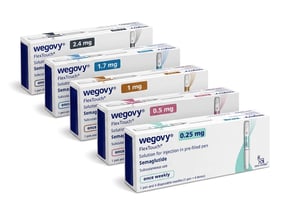
Wegovy
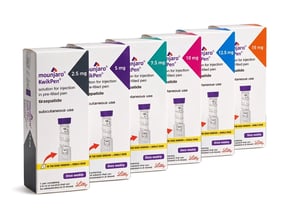
Mounjaro
Xenical
How Mounjaro affects hunger, cravings and food noise
Most people notice changes in how they think about food before they notice changes on the scale. This is a direct result of the hormone signalling described above.
How Mounjaro reduces appetite and cravings
Tirzepatide acts on appetite centres in the hypothalamus, reducing hunger signals and portion sizes needed to feel satisfied. Many people describe a reduction in "food noise", the near-constant background thoughts about what to eat next, along with fewer food cravings, which can make sticking to healthier choices considerably easier.
Slower digestion: why you feel fuller for longer
Mounjaro also delays gastric emptying, meaning food stays in the stomach for longer after a meal. This extends fullness between meals and is part of why appetite suppression lasts throughout the day rather than fading after an hour or two.
When will you notice Mounjaro working?

Effects don't appear all at once. So, how quickly does Mounjaro work? It builds gradually as the dose increases, and how long Mounjaro takes to work overall depends partly on your starting dose and how your body responds.
What to expect in the first few weeks
Appetite changes are often the most noticeable effect in the Mounjaro first week, sometimes appearing within a few days even at the low 2.5mg starting dose. Mild gastrointestinal side effects, such as nausea, constipation or reduced appetite for certain foods, are common early on and usually settle as the body adjusts.
When do you start losing weight on Mounjaro?
Measurable weight loss is typically visible from around four weeks into treatment, with the rate accelerating as the dose is titrated upward over the following months. Trial data shows weight loss continuing steadily for at least a year before levelling off.
Mounjaro weight loss effects: what the trial results show
The evidence behind Mounjaro's weight loss effects comes from two major trial programmes: the SURMOUNT trial series for weight management, and the SURPASS trial series, which established tirzepatide's safety for blood sugar control in type 2 diabetes.
In SURMOUNT-1, adults with obesity or overweight but without diabetes lost an average of 16.0% of body weight on the 5mg dose, 21.4% on 10mg and 22.5% on the maximum 15mg dose over 72 weeks, compared with 2.4% on placebo [1]. In SURMOUNT-2, which studied adults with obesity and type 2 diabetes, average weight loss reached up to 15.7% at the higher doses, still substantially greater than placebo [2]. SURMOUNT-3 further showed that adding tirzepatide after a structured lifestyle programme produced significant extra weight loss on top of what diet and exercise alone had achieved [3].
Longer-term data from SURMOUNT-4 found that people who continued treatment maintained an average weight reduction of over 25% at 88 weeks, whereas those switched to placebo regained much of the weight they had lost [4]. These Mounjaro before and after weight loss results are among the strongest recorded for any licensed weight loss medication to date.
Does Mounjaro burn fat or just reduce appetite?
Mounjaro doesn't directly "burn" fat in the way exercise does. Its main effect is reducing how much you eat, by lowering appetite and slowing digestion, which puts the body into a calorie deficit that drives fat loss over time.
Some research suggests tirzepatide may also have modest direct effects on fat and blood sugar handling, independent of eating less. In practice, though, appetite suppression and prolonged fullness remain the main mechanisms behind the results seen in trials, which is why diet quality and activity levels still matter throughout treatment.
Mounjaro and cardiovascular health
Mounjaro cardiovascular effects have been studied in adults with type 2 diabetes and established heart disease through the SURPASS-CVOT trial. Over a median follow-up of four years, cardiovascular death, heart attack or stroke occurred in 12.2% of people taking Mounjaro compared with 13.1% of those taking dulaglutide, a difference that met the criteria for non-inferiority [6].
A separate trial, SURMOUNT-MMO, is investigating whether these cardiovascular benefits extend to people with obesity who don't have diabetes [7]. Results aren't yet available, so cardiovascular benefit in this wider group hasn't been confirmed in the same way as for semaglutide.
Mounjaro side effects: what to know
Like all medicines, Mounjaro can cause side effects, and it's worth knowing what's common, what's more serious, and when to seek medical help. Your patient information leaflet lists these in full [11], and your healthcare professional will talk you through your personal medical history and current medications before you start treatment or add any new medication to your routine.
Common side effects
The most common side effects of Mounjaro affect the digestive system: nausea, diarrhoea, constipation, loss of appetite and stomach pain. These are most likely around a dose increase and tend to ease within a few weeks as your body adjusts. Staying hydrated and eating smaller meals can help while you settle into a new dose.
Serious side effects and when to get medical help
Less commonly, Mounjaro has been linked to more serious side effects, including severe stomach pain that could indicate inflammation of the pancreas, gallbladder problems such as gallstones, kidney problems linked to dehydration from prolonged vomiting or diarrhoea, and low blood sugar, especially alongside other diabetes medications. Signs of a serious allergic reaction, such as facial swelling, rash or difficulty breathing, need urgent medical attention. Redness or discomfort at the injection site can also occur but is usually mild.
Tirzepatide has also been associated with thyroid C-cell tumours in animal studies, and it isn't suitable for anyone with a personal or family history of medullary thyroid carcinoma, or for anyone with multiple endocrine neoplasia syndrome type 2 (MEN 2) [10]. This is why your healthcare team will ask about your medical history and family history before agreeing to prescribe Mounjaro.
Who should be cautious taking Mounjaro?
Tell your healthcare team about any medical conditions, gallbladder issues, any previous episode of pancreatitis, severe digestive problems such as gastroparesis, personal or family history of medullary thyroid cancer, and any other medications you're taking before starting treatment. This helps them judge whether Mounjaro carries an increased risk for you, and whether your current dose, a dose adjustment, or a different medication is the right choice.
Mounjaro is not recommended during pregnancy, and treatment should be stopped at least one month before a planned pregnancy. Effective contraception is advised during treatment, partly because weight loss itself can affect fertility and menstrual cycles. Importantly, Mounjaro can also reduce the effectiveness of oral contraceptives, because slower stomach emptying reduces how much hormone is absorbed. If you take the pill, switch to a non-oral method or add a barrier method such as condoms for 4 weeks after starting Mounjaro and for 4 weeks after every dose increase. Non-oral methods such as implants, coils, patches and injections are not affected.
How does Mounjaro work differently from Wegovy?
Mounjaro and Wegovy are the two most talked-about weight loss medications in the UK, but they don't work in quite the same way, and this shows up in the results.
GLP-1 vs dual GLP-1 and GIP
Wegovy contains semaglutide, which activates only the GLP-1 receptor. Mounjaro's tirzepatide activates both the GLP-1 and GIP receptors, giving it a broader hormonal effect on appetite and blood sugar regulation. This is the core of how Mounjaro works differently from Wegovy, even though both belong to the same broader family of weight loss injections.
Mounjaro vs Wegovy: how it works and weight loss results
The head-to-head SURMOUNT-5 trial compared the two directly in adults with obesity or overweight and at least one weight-related condition. At 72 weeks, tirzepatide produced an average weight loss of 20.2%, compared with 13.7% for semaglutide, and 31.6% of people on tirzepatide lost at least a quarter of their body weight, against 16.1% on semaglutide [5].
Getting the most from Mounjaro
Mounjaro works best as part of a broader approach to weight management, not a standalone fix. A few simple lifestyle changes make a real difference to comfort and results.
Mounjaro and diet: what to eat while taking Mounjaro
When it comes to Mounjaro and lifestyle, smaller, protein-rich meals tend to sit better than large or high-fat portions, which can worsen nausea because digestion slows. Eating slowly, stopping at the first sign of fullness and spreading intake across smaller meals also helps, as does keeping fluids up between meals rather than drinking large amounts with food.
Mounjaro and exercise: how movement supports results
Because the weight lost includes both fat and lean tissue, regular movement, particularly resistance training, helps preserve muscle mass during the deficit. This matters for people considering weight loss injections as a longer-term option rather than a short course.
Mounjaro and alcohol: what to know
Alcohol can worsen nausea alongside tirzepatide, and it adds calories that work against the deficit the medicine is helping create. Most people find it easier to cut back, particularly during the early dose-titration weeks.
What if Mounjaro stops working?

It's common for progress to slow at some point during treatment, and this doesn't necessarily mean Mounjaro isn't working.
Why weight loss can slow down or plateau
As body weight falls, the body needs fewer calories to maintain itself, so the same dose and habits that produced steady loss earlier can naturally lead to a Mounjaro plateau. This is an expected part of the process rather than a sign of treatment failure.
What to do if Mounjaro not working for you
If weight loss has stalled for several weeks, it's worth speaking to your prescriber rather than adjusting your current dose yourself. They can review your dose, adherence, diet and activity levels, and confirm whether a dose increase or further support is appropriate.
Who can be prescribed Mounjaro in the UK?
Understanding who can take Mounjaro starts with the licensing criteria set by the MHRA. Privately, Mounjaro is suitable for adults with a BMI of 30 or above, or 27 or above with at least one weight-related health condition such as high blood pressure, high cholesterol, prediabetes or obstructive sleep apnoea, following a clinical assessment by a healthcare professional who can then prescribe Mounjaro.
NHS access is governed by separate NICE guidance, which sets a higher threshold, generally a BMI of 35 or above (32.5 for some ethnic groups) with a qualifying weight-related condition, and is being rolled out in phases through GP practices [9]. Mounjaro NHS UK availability still varies by area, with long waiting lists in some regions, so many people choose the private route for quicker access through a regulated prescriber.
Frequently asked questions about Mounjaro effects
Here are quick answers to some of the questions people ask most often once they've started, or are about to start, treatment.
How long does it take for Mounjaro to suppress appetite?
Most people notice reduced hunger within the first one to two weeks of starting treatment, even at the lowest 2.5mg dose, with the effect becoming more pronounced as the dose is increased.
Does Mounjaro cause muscle loss?
Some of the weight lost on Mounjaro includes lean tissue, which is common with any significant weight loss. Enough protein and regular resistance exercise help minimise muscle loss while still losing fat.
Can Mounjaro be used for conditions other than weight loss?
Yes. Mounjaro is also licensed in the UK for blood sugar control in adults with type 2 diabetes, and its cardiovascular effects in people with heart disease have been studied in dedicated trials.
Will I regain weight if I stop taking Mounjaro?
Trial data show that people who stop tirzepatide tend to regain a meaningful portion of the weight they lost, particularly if lifestyle changes aren't maintained. Any decision to stop treatment is best discussed with your healthcare professional first.
How long does Mounjaro take to work?
Appetite changes often start within the first week, with visible weight loss typically appearing by around four weeks in.
Who is Mounjaro suitable for?
Mounjaro is suitable for adults with a BMI of 30 or above, or 27 or above with at least one weight-related health condition such as high blood pressure, high cholesterol, prediabetes or obstructive sleep apnoea.
-
[1] Jastreboff AM, Aronne LJ, Ahmad NN, et al. Tirzepatide once weekly for the treatment of obesity. N Engl J Med. 2022;387(3):205–216. doi: 10.1056/NEJMoa2206038.
[2] Garvey WT, Frias JP, Jastreboff AM, et al. Tirzepatide once weekly for the treatment of obesity in people with type 2 diabetes (SURMOUNT-2): a double-blind, randomised, multicentre, placebo-controlled, phase 3 trial. Lancet. 2023;402(10402):613–626. doi: 10.1016/S0140-6736(23)01200-X.
[3] Wadden TA, Chao AM, Machineni S, et al. Tirzepatide after intensive lifestyle intervention in adults with overweight or obesity: the SURMOUNT-3 phase 3 trial. Nat Med. 2023;29(11):2970–2978.
doi: 10.1038/s41591-023-02597-w.[4] Aronne LJ, Sattar N, Horn DB, et al. Continued treatment with tirzepatide for maintenance of weight reduction in adults with obesity: the SURMOUNT-4 randomized clinical trial. JAMA. 2024;331(1):38–48.
doi: 10.1001/jama.2023.24945.[5] Aronne LJ, Horn DB, le Roux CW, et al. Tirzepatide as compared with semaglutide for the treatment of obesity. N Engl J Med. 2025;393(1):26–36. doi: 10.1056/NEJMoa2416394.
[6] Nicholls SJ, Pavo I, Bhatt DL, et al. Cardiovascular outcomes with tirzepatide versus dulaglutide in type 2 diabetes (SURPASS-CVOT): a randomised, double-blind trial. N Engl J Med. 2025.
doi: 10.1056/NEJMoa2505928.[7] Eli Lilly and Company. SURMOUNT-MMO: A study of tirzepatide (LY3298176) in participants with obesity or overweight (NCT05556512). ClinicalTrials.gov. Accessed August 3, 2026. https://clinicaltrials.gov/study/NCT05556512
[8] Medicines and Healthcare products Regulatory Agency; UK Health Security Agency. GLP-1 medicines for weight loss and diabetes: what you need to know. GOV.UK. Published February 5, 2026. https://www.gov.uk/government/publications/glp-1-medicines-for-weight-loss-and-diabetes-what-you-need-to-know/glp-1-medicines-for-weight-loss-and-diabetes-what-you-need-to-know
[9] National Institute for Health and Care Excellence. Tirzepatide for managing overweight and obesity. Technology Appraisal Guidance TA1026. Published October 9, 2024. https://www.nice.org.uk/guidance/ta1026
[10] Eli Lilly and Company Limited. Mounjaro 2.5 mg solution for injection in pre-filled pen: summary of product characteristics. Electronic Medicines Compendium. https://www.medicines.org.uk/emc/product/15484/smpc
[11] Eli Lilly and Company Limited. Mounjaro 2.5 mg solution for injection in pre-filled pen: patient information leaflet. Electronic Medicines Compendium. https://www.medicines.org.uk/emc/product/15484/pil