

How much weight change is typical with Mounjaro?
For adults considering or using Mounjaro for weight management, a Mounjaro before and after can look very different from one person to the next, so knowing what is typical can help you judge your own progress fairly.
In clinical trials, weight loss built over months. [1] In SURMOUNT-1, average weight loss at 72 weeks was 15.0% with 5 mg, 19.5% with 10 mg and 20.9% with 15 mg using the treatment-regimen analysis. [2] These figures represent trial averages, not a forecast of how much weight one person will lose.
Mounjaro is licensed in the UK for weight management in eligible adults alongside a reduced-calorie diet and increased physical activity. Before you buy Mounjaro, a qualified healthcare professional should check your starting body weight, BMI, health history and other medicines. [1]
Mounjaro tirzepatide treatment begins at 2.5 mg once weekly for four weeks, then usually moves to 5 mg. Later dose increase steps are 2.5 mg at intervals of at least four weeks; 5 mg, 10 mg and 15 mg are maintenance doses, with 15 mg the adult maximum. [1] The first few weeks are the start of treatment, not a test of what you will eventually achieve on higher doses.
Before treatment, some people find appetite difficult to manage or notice frequent cravings for high-calorie foods. Tirzepatide activates the receptors for two gut hormones, GIP and GLP-1, helping to regulate appetite, food intake and glucose-dependent insulin secretion. Clinical data show reduced hunger from the first week and greater satiety from around week 3. Appetite effects can therefore begin within the first two weeks, although appetite suppression and weight loss vary between individuals. [1]
How do Mounjaro weight loss results show through the months?

Mounjaro results build over time. A month-by-month comparison can help set realistic expectations based on your starting weight and dose, but there is no reliable timetable for visible change. Clinical trial data and real world evidence provide benchmarks, not personal deadlines.
What should you record before the first pen?
Record your starting body weight, waist measurement and, if useful, a photograph in similar clothing and lighting. Weighing under similar conditions on the same day each week makes trends easier to follow, while photos taken on the same day can make a Mounjaro before and after comparison more meaningful.
You might also note appetite, dietary habits, energy levels, sleep quality, mobility, joint pain and relevant health markers such as blood pressure or blood sugar when monitored by your clinical team. This gives context to your weight loss journey. The Mounjaro effects you notice may include reduced appetite or increased fullness, but other changes do not prove the medicine is working.
What does a Mounjaro before and after show at 1 month?
A Mounjaro before and after 1 month may show very little visible difference. The first four weeks use the 2.5 mg starting dose, which begins dose escalation rather than representing the dose associated with the largest average weight loss in clinical trials. [1]
So, how much weight can you realistically lose in the first 4 weeks of Mounjaro? There is no standard number. Appetite suppression may begin during the early weeks, but clinical data do not establish a typical one-month kilogram loss. Some people lose weight early; others have a quieter first month while the body adjusts. Dramatic weight loss is not required for later progress.
People often ask whether visible weight loss starts at 4 to 8 weeks or whether changes in clothing fit appear within 4 to 12 weeks. Clinical trials do not establish either as a standard timetable, so visible changes may appear earlier or later.
What should you look for at 8 weeks?
By eight weeks, someone following the usual schedule will generally have spent four weeks on 2.5 mg and four weeks on 5 mg. [1] Changes may show up first in appetite, portion size, waist measurement or the direction of the scale rather than in a dramatic Mounjaro before and after photograph.
If nausea, constipation, abdominal discomfort or other Mounjaro side effects make eating or drinking difficult, contact your prescriber. Gastrointestinal side effects are most common during dose escalation and often reduce over time. [1]
What happens by 3 months?
By three months, the picture is usually clearer. A large 2026 UK real world cohort found 8.8% average weight loss among people with a recorded weight. [3] It is useful context, not an individual target.
A SURMOUNT-1 analysis also shows why a slower start needs perspective. Among adherent participants who had lost less than 5% of body weight by week 12, 70% reached at least 5% by week 24 and 90% by 72 weeks. [4] A quiet first three months therefore does not mean someone will never respond.
Why do some people say they feel so good on Mounjaro? Reduced appetite or fewer cravings may feel like a meaningful improvement, and real world patients have reported changes in mood and mobility. [3] Some may feel less preoccupied with food, but food-related anxiety is not an established treatment outcome. Nor is there an evidence-based three-month milestone for better energy levels; fatigue is also recognised, and energy levels can vary. [1]
What extra change is usual at 6 months on Mounjaro?
At six months, the same UK real world cohort reported average weight loss of 13.5% among people with a recorded weight; 89.9% had lost at least 5% and 72.1% at least 10%. [3] An 8–15% loss by six months should not be treated as a rule for most patients; individual results varied. These are averages, not promises.
Starting weight matters when percentages become kilograms. Ten kilograms is 10% of a starting weight of 100 kg but 12.5% of 80 kg, so there is no reliable answer to “How long does it take to lose 10 kilos on Mounjaro?” without knowing the starting weight and individual response.
A Mounjaro before and after at six months may show a smaller waist. Clinical trials found a significant reduction in waist circumference alongside lower blood pressure and improvements in several cholesterol and lipid measures. [1] These changes can support metabolic health, although health benefits are not judged by appearance alone.
Some people may experience less joint pain while taking tirzepatide, although the evidence is still limited. In a large observational study, tirzepatide users had fewer recorded joint-pain encounters, particularly knee pain, than matched patients taking phentermine. [5] Because the study was observational, it cannot prove that tirzepatide caused the difference, and pain reduction is not a licensed indication for Mounjaro. A randomised tirzepatide trial in people with obesity and knee osteoarthritis is still under way. [6]
Mounjaro is also licensed separately for type 2 diabetes, where clinical trials show reductions in blood sugar and HbA1c. [1]
What extra change is usual after a year on Mounjaro?
In the UK real world cohort, average weight loss among people with recorded weights was 17.4% at 12 months. [3] In SURMOUNT-1, published in the New England Journal of Medicine, the treatment-regimen analysis found average weight loss of 15.0%, 19.5% and 20.9% at 72 weeks with 5 mg, 10 mg and 15 mg. [2]
Current UK product information reports 16.0%, 21.4% and 22.5% under an efficacy estimand that assumes participants remained on assigned treatment. [1] The figures differ because the analyses answer different statistical questions.
Looking at body weight over 72 weeks also explains why higher doses should not be treated as a race. Higher doses produced greater average weight loss at the group level, but people do not need to reach 15 mg before anything happens. Clinical trial data show meaningful weight loss on lower maintenance doses too. [1, 2]
Body-composition research gives another perspective on Mounjaro before and after. In a SURMOUNT-1 DXA substudy, about 75% of weight lost was fat mass and 25% lean mass. [7] Overall weight reduction can change facial appearance, but Mounjaro does not selectively target facial fat. It can reduce waist circumference and visceral fat, but it does not selectively shrink belly fat. [1, 7] Loose skin may become more noticeable after substantial weight loss.
Explore related treatments
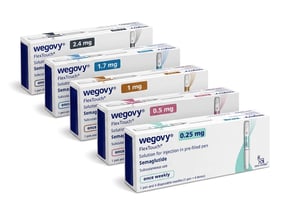
Wegovy
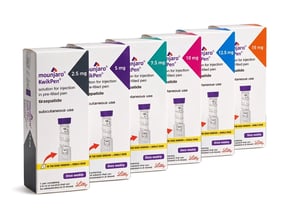
Mounjaro
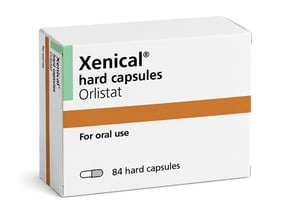
Xenical
Why do some people see more change than others?
Variation is expected. Response to Mounjaro tirzepatide can differ with starting body weight, dose, treatment continuity, appetite response and lifestyle support. Clinical trials give group averages; real world use adds differences in adherence and routine.
Starting weight and the dose you reach
People with a higher starting weight may lose more kilograms for the same percentage change, but that does not guarantee a larger percentage loss. Higher doses produced greater average weight loss in clinical trials, yet 15 mg is not necessary or suitable for everyone. [1, 2]
Nutrition matters too. During weight management, reduced appetite can make adequate protein intake, fibre and fluids more important. [8] Resistance training can support muscle mass and may help limit muscle loss. [8] Lifestyle changes such as mindful eating, reducing ultra processed foods and other healthy habits can form part of lifestyle support and sustainable habits.
What if you skip pens or keep eating as before?
Inconsistent treatment can make Mounjaro results less predictable. The UK real world study found more regular ordering was associated with greater weight loss, although that does not prove ordering cadence alone caused the difference. [3]
Mounjaro is licensed alongside a reduced-calorie diet and physical activity. [1] Lifestyle changes still matter. Reducing ultra processed foods may help some people, but no single food rule determines whether Mounjaro works. If progress is unusually slow, your clinical team can review treatment continuity, dose and side effects.
Does Mounjaro usually show more change than Wegovy?

In SURMOUNT-5, adults with obesity but without type 2 diabetes received maximum tolerated tirzepatide or semaglutide for 72 weeks. In the primary treatment-regimen analysis, average weight loss was 20.2% with tirzepatide and 13.7% with semaglutide. [9]
Current UK product information also reports an efficacy analysis of 21.6% versus 15.4%. [1] That does not mean every individual will lose more with tirzepatide. Wegovy vs Mounjaro evidence describes average group differences, not an individual prediction.
What if the change is slower than you expected?
Weight loss is not linear. A post hoc analysis of SURMOUNT clinical trials found that many participants reached a plateau during longer treatment, and higher doses were associated with reaching it later. [10] A few quiet weeks can therefore happen while longer-term change is still developing.
Do not speed up a dose increase or take extra medicine to chase dramatic weight loss. A qualified healthcare professional can review the dose, adherence and side effects. NICE recommends reviewing whether to continue treatment if less than 5% of initial body weight has been lost after six months on the highest tolerated dose. [11]
If treatment is unsuitable or the response remains limited, Mounjaro alternatives may form part of a clinical discussion rather than a self-directed switch.
Do the changes last if you stop?
Weight regain is common after Mounjaro is stopped. In SURMOUNT-4, participants received tirzepatide for 36 weeks, then those who switched to placebo regained an average of 14.0% from the randomisation point over the next 52 weeks, while those continuing tirzepatide lost a further 5.5%. Lifestyle intervention continued in both groups. [12] A post hoc analysis found that 82.5% of participants who withdrew tirzepatide regained at least 25% of the weight they had initially lost within one year. [13]
A 2026 systematic review of 37 studies found that, in the subgroup of newer incretin medicines such as semaglutide and tirzepatide, weight was regained at an average rate of about 0.8 kg a month. The analysis projected a return to starting weight after around 1.5 years, although follow-up beyond 12 months for these newer medicines was limited. [14]
Lifestyle changes did not completely prevent weight regain in the withdrawal group. [12, 13] Dietary support and regular physical activity can support long-term weight maintenance, but they cannot guarantee that lost weight will stay off after treatment ends. NICE recommends continued support when treatment is stopped. [11]
If long-term treatment is appropriate, the Mounjaro price may also affect whether private treatment is sustainable.
Frequently asked questions
Mounjaro results are best viewed as a trend, not a deadline. Starting body weight, dose, and duration shape a Mounjaro before and after, while a photograph cannot show blood sugar, blood pressure or metabolic health.
Will I lose weight on 2.5 mg Mounjaro?
You may lose on Mounjaro at 2.5 mg, but it is the starting dose rather than an adult maintenance dose. [1] Some people notice appetite suppression or early weight loss; others do not. The first month should not be judged against the same amount of weight somebody else lost.
Do you need the highest dose before anything shows?
No. Higher doses produced larger group-average reductions in clinical trials, but clinically meaningful weight loss occurred across maintenance-dose groups. [1, 2] How much you lose on Mounjaro depends on more than the final dose.
Can a few quiet weeks on the scale still mean fat loss?
Yes. Fluid shifts can temporarily hide fat loss, and a home scale cannot tell you exactly which tissue is changing. In the SURMOUNT-1 body-composition substudy, most weight lost was fat mass, although some lean mass was also lost. [7]
That is why waist measurements and longer trends can be more useful than expecting significant weight loss results every week. A Mounjaro weight loss before and after should be judged over months.
What if weight loss stops after it has already started?
A plateau does not automatically mean treatment has failed. Clinical data show that the rate of weight loss commonly slows over time. [10] Review the trend, dose and eating pattern with your prescriber rather than making dose changes yourself.
If the plateau persists, the clinical team can decide whether continuing still offers enough benefit. The aim is sustainable weight management, not endless weekly loss.
How long do people usually stay on Mounjaro for weight loss?
There is no single fixed treatment duration in the UK licence. Mounjaro is indicated for weight loss and weight maintenance. [1] NICE recommends reviewing whether treatment should continue when response is limited, taking the benefits and risks into account. [11]
A Mounjaro before and after is only part of the picture. The longer-term goal is to maintain useful change while protecting nutrition and overall health. Whether you continue should be reviewed with your prescriber, not decided by the same amount of weight somebody else lost.
-
-
Eli Lilly and Company Limited. Mounjaro KwikPen 5 mg solution for injection in pre-filled pen: Summary of Product Characteristics. Electronic Medicines Compendium. Updated April 16, 2026.
-
Jastreboff AM, Aronne LJ, Ahmad NN, et al. Tirzepatide once weekly for the treatment of obesity. N Engl J Med. 2022;387(3):205-216. doi:10.1056/NEJMoa2206038.
-
Rosenior-Patten O, Lees Z, Rowe R, et al. Real-world effectiveness and treatment patterns of tirzepatide in a large UK digital health cohort. Diabetes Obes Metab. 2026;28(10):9621-9632. doi:10.1111/dom.71067.
-
Ard J, Lee CJ, Gudzune K, et al. Weight reduction over time in tirzepatide-treated participants by early weight loss response: post hoc analysis in SURMOUNT-1. Diabetes Obes Metab. 2025;27(9):5064-5071. doi:10.1111/dom.16554.
-
Challener G, Ma KSK, McCormick N, et al. Impact of tirzepatide on musculoskeletal pain and risky analgesic use among non-diabetic individuals with overweight or obese body habitus: a propensity score-matched, active comparator, new user design study. Ann Rheum Dis. 2025;84(suppl 1):488-489. doi:10.1016/j.ard.2025.05.596.
-
University of Melbourne. Subcutaneous Tirzepatide Once-weekly in Patients With Obesity and Knee Osteoarthritis (STOP KNEE-OA). ClinicalTrials.gov. NCT06191848.
-
Look M, Dunn JP, Kushner RF, et al. Body composition changes during weight reduction with tirzepatide in the SURMOUNT-1 study of adults with obesity or overweight. Diabetes Obes Metab. 2025;27(5):2720-2729. doi:10.1111/dom.16275.
-
British Dietetic Association. Medications for obesity must be backed by dietetic support. Published July 6, 2026.
-
Aronne LJ, Horn DB, le Roux CW, et al. Tirzepatide as compared with semaglutide for the treatment of obesity. N Engl J Med. 2025;393:26-36. doi:10.1056/NEJMoa2416394.
-
Horn DB, Kahan S, Batterham RL, et al. Time to weight plateau with tirzepatide treatment in the SURMOUNT-1 and SURMOUNT-4 clinical trials. Clin Obes. 2025;15(3):e12734. doi:10.1111/cob.12734.
-
National Institute for Health and Care Excellence. Prescribing, reviewing and stopping tirzepatide. In: A practical guide to using medicines to manage overweight and obesity.
-
Aronne LJ, Sattar N, Horn DB, et al. Continued treatment with tirzepatide for maintenance of weight reduction in adults with obesity: the SURMOUNT-4 randomized clinical trial. JAMA. 2024;331(1):38-48. doi:10.1001/jama.2023.24945.
-
Horn DB, Linetzky B, Davies MJ, et al. Cardiometabolic Parameter Change by Weight Regain on Tirzepatide Withdrawal in Adults With Obesity: A Post Hoc Analysis of the SURMOUNT-4 Trial. JAMA Intern Med. 2026;186(2):157-167. doi:10.1001/jamainternmed.2025.6112.
-
West S, Scragg J, Aveyard P, et al. Weight regain after cessation of medication for weight management: systematic review and meta-analysis. BMJ. 2026;392:e085304. doi:10.1136/bmj-2025-085304.
-