

Positive Mounjaro weight loss reviews: what worked well
Mounjaro reviews are easy to find, and they rarely agree. Online Mounjaro reviews from the UK describe everything from a significant weight loss journey with less hunger to a few rough weeks of feeling sick and a decision to stop treatment. This article collects what UK reviews and Mounjaro user reviews commonly report about results, side effects and life after treatment, and it explains why Mounjaro experiences differ so much. It is general information, not medical advice. Mounjaro (tirzepatide) is a prescription-only medicine in the UK, so taking Mounjaro should always involve healthcare professionals who know your medical history.
Positive Mounjaro weight loss reviews tend to share three themes: calmer appetite, steady progress on the scales and a sense of control that earlier diets did not give. Mounjaro is a once-weekly injection, and many patients say the injection process was simpler than they expected. A personal account is not clinical evidence, but it shows what people notice day to day, which trial tables cannot.
Appetite and food noise
The most common comment in tirzepatide reviews is about appetite changes. People describe feeling full sooner, finishing smaller portions and thinking about food less often. Many call this "quiet food noise", meaning fewer urges to snack in the evening or reach for junk food.
Reduced appetite is an expected effect rather than a lucky one, and it follows from how Mounjaro works: tirzepatide acts on two gut hormones involved in hunger, fullness and blood sugar. For many people, it makes changing eating habits feel less like a daily battle.
Some reviewers say the effect felt strongest in the days after the injection and softer by the end of the week. Others noticed fewer cravings for sugary or fatty food. Not everyone feels this. A few people report only a mild change, which does not automatically mean the medicine is not working, because it can take time to reach a dose that suits you.
Weight loss in the first weeks and months
Online reviews often describe a modest drop in the first few weeks, followed by faster progress as the prescribed dose goes up. That matches the dosing schedule. Treatment begins with 2.5 mg once weekly for four weeks to help the body adjust, then increases to 5 mg; weight loss can begin during the early weeks and may continue as treatment progresses.
Clinical trials give the wider picture. In the SURMOUNT-1 trial, adults with obesity who used tirzepatide alongside lifestyle changes lost on average about 15 to 21 percent of their body weight over 72 weeks, depending on the dose, compared with roughly 3 percent on placebo.[1] That is significant weight loss by the standards of any weight loss medication, but it is an average. If you are wondering how much weight you could lose, the honest answer is a range, not a promise.
Many users also report results that aren't on the scale: a smaller waist circumference, looser clothes, easier movement, and better check-up results, such as blood pressure or blood sugar control. These matter, and they are worth tracking next to your starting weight.
Explore related treatments
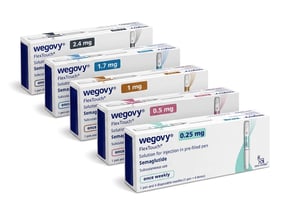
Wegovy
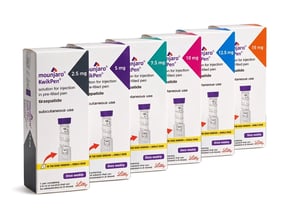
Mounjaro
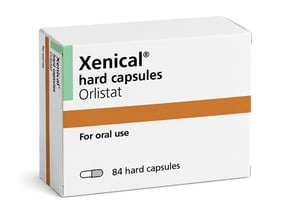
Xenical
Negative Mounjaro reviews: when it didn't work as expected
Not every review is positive. Negative Mounjaro reviews usually fall into three groups: side effects that were hard to tolerate, slower weight loss than expected, and frustration with the cost or the process of getting treatment.
Some people lose very little in the early months. Possible reasons include being on a low dose, still adjusting to the medicine, or other factors such as poor sleep, stress, other medication or medical conditions. A few reviewers say they ate less but still struggled with snacking, which suggests the injection supports lifestyle changes rather than replacing them. Does Mounjaro work for everyone? No medicine does, and the range of results in trials shows it.
Others describe feeling unwell for longer than they expected, and some stop treatment because of this. Many people start by asking, are weight loss injections safe? The answer depends on your medical history, so read the patient information leaflet and talk to a prescriber before and during treatment. It also helps to remember that unhappy people are often more motivated to post an online review than people with a quiet, uneventful experience, so negative accounts can look more common than they are.
Be careful with review sites and forums in general. Some carry an affiliate link or promote a seller, and some push readers to buy Mounjaro from sources that do not ask for a prescription. In the UK, Mounjaro should only be supplied by a regulated pharmacy after a proper assessment, and unregulated sellers are a real safety risk.
Side effects: what users actually report

Side effects are a large part of Mounjaro experiences. The effects reported most often are digestive: feeling sick, diarrhoea, constipation, vomiting, stomach pain, indigestion and bloating. Some people also mention tiredness, headaches or burping. Most describe these as mild to moderate, strongest around dose increases, and easing as the body adjusts.
Reactions at the injection site, such as redness, itching or a small lump, are also reported. They are usually minor, and rotating the injection site can help. Most Mounjaro side effects settle as the body adjusts, but the full range is wider than the common ones listed here, so check the patient information leaflet for the complete list.
Rarer problems need attention. Severe, persistent stomach pain, with or without vomiting, can be a sign of acute pancreatitis and needs urgent medical help.[2] Low blood sugar is more likely if Mounjaro is combined with insulin or certain other diabetes medications, so a prescriber may adjust those.[2] Mounjaro can also reduce how well oral contraceptive pills work, so ask about extra precautions, and tell your prescriber if you are pregnant, planning a pregnancy or breastfeeding.[2] Reviews describe these events, but they cannot show how likely they are, which is why the patient information leaflet and your prescriber matter more than any single story.
Tell a prescriber or pharmacist about any severe problems rather than pushing through them.
The first weeks on Mounjaro
Reviews of the first few weeks follow a pattern. Treatment usually starts with a 2.5 mg dose once a week for four weeks, which isn't meant to be the long-term level.[2] It gives the body time to adjust, and it is why some people see little change at first. After that, the prescribed dose is raised in steps of 2.5 mg, no sooner than every four weeks, until a maintenance dose is agreed with the prescriber.[2] Each increase can bring a short return of nausea, as many reviewers note. If a step feels too big, a prescriber may advise staying on the current dose for longer. Never change your own dose.
Common tips from users in the early weeks include:
- eating smaller meals and stopping when full
- limiting greasy, fried or very sugary food, which many say triggers feeling sick
- drinking enough water
- not lying down straight after eating
- keeping notes on appetite, side effects and your own progress
A good provider will provide ongoing support and a follow-up after starting treatment, so questions can be answered and the plan adjusted. Before the first dose, a weight loss consultation should cover your medical history, current medication, goals and the potential risks. Many UK providers, including an online weight loss clinic, work this way, and treatment should always be under medical supervision.
Eligibility matters too. Under its UK licence, Mounjaro is for adults with a higher body mass index, or with weight-related health problems, alongside a reduced-calorie diet and more physical activity.[2] The National Institute for Health and Care Excellence (NICE) recommends tirzepatide for weight management on the NHS, with access being phased in for specific groups, so NHS criteria are narrower than a private prescriber's licence.[3] A prescriber will tell you whether you are a suitable candidate.
Mounjaro reviews after stopping
Reviews written after people stop weight loss treatment are some of the most useful and the most sobering. Many report that appetite returns gradually and that some weight comes back, especially if eating habits drift back to how they were before.
Clinical evidence points the same way. In the SURMOUNT-4 trial, participants lost about 21 percent of their body weight over 36 weeks on tirzepatide. Those then switched to placebo regained about 14 percent over the next 52 weeks, roughly two-thirds of what they had lost, while those who continued lost a further 5.5 percent.[4] These are averages, and individual results vary.
This does not mean the treatment failed. Obesity is generally understood as a long-term condition, and for many people weight maintenance takes continued effort, whether that means staying on treatment, moving to a lower dose or relying more on lifestyle changes. Users who describe the smoothest experience afterwards often built habits during treatment, such as regular protein-rich meals, strength training and daily walks, and planned the transition with a clinician.
If you want to stop treatment, speak to your prescriber first. They can help you plan for weight maintenance, including ongoing dietary and physical activity support, and discuss whether any alternative treatment is appropriate. Some people notice stronger hunger for a few weeks, so it helps to expect it. Stopping suddenly because of cost or supply is a common route to regain, which is why it pays to think about the long term before starting treatment.
Why Mounjaro reviews vary

Two people can take the same medicine in the same way and have very different experiences. Several factors explain the gap:
- Starting weight and health: people with a higher starting weight often lose more kilograms, even when the percentages look similar.
- Dose and timing: results depend on the current dose, how quickly it was raised and how long treatment lasted. A higher dose is not automatically better for every person.
- Eating habits and activity: reviewers who also change what they eat and move more usually report better results.
- Medical conditions and medication: type 2 diabetes, hormonal conditions and other prescription medication can all affect results and side effects.
- Expectations: people hoping for a quick fix are more likely to be disappointed than those with realistic expectations.
- Who is writing: an online review is a snapshot, often written at a high or low point.
Use Mounjaro reviews UK readers share to understand what to expect and what to ask, not to predict your own outcome. They are best read alongside clinical evidence, the patient information leaflet and advice from your own healthcare professionals. If a review promises a guaranteed amount of weight loss, treat it with caution.
A practical approach is to write down your goals before you start, such as weight, waist circumference, blood pressure or fitness, and review them with your prescriber. That makes it easier to judge your own progress honestly, instead of comparing yourself with someone else's best result. Overall health, sleep, stress and activity all shape the outcome.
Frequently asked questions
Below are answers to the questions people ask most often after reading Mounjaro reviews, covering prescriptions, pace of weight loss, alcohol and long-term use.
Can I get Mounjaro without a prescription in the UK?
No. Mounjaro is a prescription-only medicine and must be prescribed after an assessment by a qualified prescriber. A legitimate service will ask about your medical history, current medication, height and weight. Be wary of any website offering to let you buy Mounjaro with no checks, because products from unregulated sources may be fake, wrongly dosed or unsafe. Use a regulated pharmacy and check its registration with the General Pharmaceutical Council.
How quickly do people lose weight on Mounjaro?
It varies. Many reviewers notice reduced appetite within the first few weeks, but the early dose is low, so the change on the scales is often modest. Weight loss usually speeds up as the dose rises, and in clinical trials the largest average losses came after many months on higher doses.[1] A steady pace is normal, and your prescriber can help you judge whether your progress is on track.
Do users prefer Mounjaro or Wegovy?
Opinions are split. Some people say Mounjaro suited their appetite better, while others do better on semaglutide because of side effects, availability or cost. In the SURMOUNT-5 head-to-head trial, tirzepatide led to greater average weight loss than semaglutide at 72 weeks (20.2 percent vs 13.7 percent), though the trial was funded by the manufacturer of tirzepatide.[5] Averages do not predict how you will respond, and the Wegovy vs Mounjaro choice often comes down to side effects, availability, cost and your medical history, so a prescriber can advise which is more suitable for you.
Can I drink alcohol on Mounjaro?
There is no blanket ban, but many users say they drink less because alcohol tastes different or makes them feel sick. Alcohol can worsen nausea and dehydration, adds calories, and can raise the risk of low blood sugar if you also take insulin or certain other diabetes medications. If you drink, keep it modest, eat first and ask your prescriber for advice based on your health.
Can I stay on Mounjaro long term?
Some people do, and some stop after reaching a goal. Because weight often returns after treatment ends, many clinicians treat obesity as a long-term condition that needs ongoing support. Whether to continue depends on your results, tolerance, health and cost, and it is a decision to make with your prescriber at regular follow up appointments.
Can I use Mounjaro if I do not have type 2 diabetes?
Yes, in some cases. Mounjaro is licensed in the UK for weight management in adults who meet certain criteria, as well as for type 2 diabetes, where it also supports better blood sugar control.[2] You do not need diabetes to be prescribed it for weight, but you must meet the eligibility criteria, and your prescriber will check for conditions that make it unsuitable. Tell them about all your medicines and any history of pancreatitis.
-
-
Jastreboff AM, Aronne LJ, Ahmad NN, et al. Tirzepatide once weekly for the treatment of obesity. N Engl J Med. 2022;387(3):205–216. doi:10.1056/NEJMoa2206038.
-
Mounjaro KwikPen solution for injection in pre-filled pen: summary of product characteristics. Eli Lilly and Company Limited. Electronic Medicines Compendium. Updated April 16, 2026. Accessed October 4, 2026. https://www.medicines.org.uk/emc/product/15486/smpc/print
-
Tirzepatide for managing overweight and obesity. Technology appraisal guidance TA1026. National Institute for Health and Care Excellence. Published December 23, 2024. Updated September 1, 2025. Accessed October 4, 2026. https://www.nice.org.uk/guidance/ta1026
-
Aronne LJ, Sattar N, Horn DB, et al. Continued treatment with tirzepatide for maintenance of weight reduction in adults with obesity: the SURMOUNT-4 randomised clinical trial. JAMA. 2024;331(1):38–48. doi:10.1001/jama.2023.24945.
-
Aronne LJ, Horn DB, le Roux CW, et al. Tirzepatide as compared with semaglutide for the treatment of obesity. N Engl J Med. 2025;393(1):26–36. doi:10.1056/NEJMoa2416394.
-