

What do typical Wegovy weight loss results look like?
Searching "Wegovy before and after" usually means one thing: you want to know if this weight loss medication actually works, and what a realistic weight loss journey might look like for you. The honest answer, based on evidence from the STEP clinical trial programme, is that Wegovy produces steady, measurable weight loss for most patients who begin treatment and stay consistent with a treatment plan, but the timeline is slower than social media transformation photos suggest, and how much weight you lose on Wegovy varies from person to person.
This guide sets out realistic expectations for what typically happens month by month once treatment begins, why before and after photos can be misleading, and what actually influences outcomes between someone who loses a modest percentage of total body weight and someone who sees significant weight loss.
Wegovy contains semaglutide, a weight loss treatment that works mainly by reducing appetite and increasing feelings of fullness, with slower stomach emptying as a secondary effect, which together lower calorie intake.
In the pivotal STEP 1 clinical trial, participants using this weight loss medication alongside a reduced-calorie diet and increased physical activity achieved an average weight loss of around 15% of their starting body weight over 68 weeks, compared with roughly 2–3% in the placebo group.[1] Later data from the STEP 5 trial on the maintenance dose showed similarly consistent results, with a significant proportion of participants achieving 5% or more weight loss, and many reaching 15% or higher.[2]
Wegovy- associated weight loss is not evenly distributed across those 68 weeks studied. Early weight loss was already observed by week 4 and continued over the treatment period, reaching its lowest average weight around week 60 in STEP 1 [1]. This is why a single before-and-after photo taken too early can look unremarkable, while the same person's photo several months later can look dramatically different.
Wegovy before and after at 1 month: what usually changes?

In the first week and throughout the first month, the recommended starting dose is 0.25mg weekly. This low dose is used to help the body adjust to treatment before the dose is increased, and individual weight changes during the first month can vary considerably. Clinical trials put typical early weight loss at this stage at around 0–2% of starting weight: for someone starting to lose weight at 90kg, that's roughly 0–1.8kg.
What most patients notice first isn't the number on the scale but appetite: smaller portions feeling satisfying, less snacking, food noise quieting down. Nausea, mild fatigue or changed bowel habits are also common in the first few weeks as the body adapts to the medication; these are worth understanding before you begin treatment, and it's worth reading about Wegovy side effects, so you know what's expected versus what needs clinical support. Wegovy before and after 1 month photos will usually show little visible physical difference, and that's a normal part of Wegovy weight loss results 1 month in, not a sign that treatment isn't working.
Explore related treatments
View all products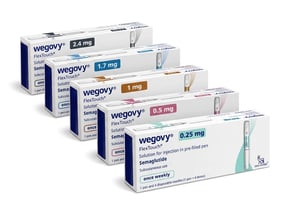
Wegovy before and after at 3 months: when does it show?
By month three, most patients have moved onto the 1mg dose, and this is typically when the weight-loss curve starts to steepen and noticeable reduction becomes easier to see. Cumulative weight loss around this point is commonly in the 4–6% range of total body weight: for that same 90kg starting weight, somewhere between 3.6kg and 5.4kg.
This is often the first stage where a genuine before-and-after difference becomes visible: looser clothing, a change in face and midsection, and, often more noticeably, a shift in dietary habits and relationship with food that's stabilised rather than fluctuating. It's also a realistic checkpoint for judging whether the medication and dose are producing measurable weight loss for you, since three months is usually long enough to see a clear trend rather than noise from water weight or daily fluctuation.
What happens from 6 months to a year?
The second half of the first year is where the cumulative effect of Wegovy treatment becomes most apparent, as the dose reaches its maintenance level and appetite suppression is at its most consistent.
What do results look like at 6 months?
Most patients reach the 2.4mg maintenance dose from around month four, though this can be later if the dose is increased more slowly to manage side effects. By six months, many people will have experienced substantial weight loss: typically in the 8–12% range of starting body weight. This is often described as a milestone: patients have moved past the initial adjustment period, appetite changes feel settled rather than new, and healthy habits like portion control and physical activity have usually had time to bed in, supporting better outcomes and long-term success.
What do results look like at 12 months?
By 12 months, many patients are approaching the results seen at the end of the STEP 1 trial's 68-week mark, where average weight loss was around 15% of starting body weight, with a significant proportion of participants losing 20% or more [1]. Weight loss tends to slow over time and may eventually plateau; in STEP-5, the average weight loss plateaued after approximately week 60 and was maintained through week 104 while treatment continued [2]. This phenomenon doesn't mean the medication has stopped working, just that the biggest percentage changes in most Wegovy weight loss results tend to happen earlier in treatment.
How reliable are Wegovy before and after photos?
Before-and-after photos are popular because they're persuasive, but they're also one of the easiest things to distort, intentionally or not. Lighting, posture, camera distance, clothing, and even time of day can all change how a photo looks without any real difference in body composition. A photo taken with better lighting and a more flattering angle can look like a bigger transformation than the scales would support, and the reverse is also true.
There's also the question of what a photo can't show: fat loss versus lean muscle mass loss, changes in body composition when the number on the scale hasn't moved much, or a plateau that's temporary rather than permanent. Photos posted online are also self-selected: people tend to share their best results and skip the plateaus, side effects, or months where progress stalled. Treat before-and-after images as illustrative rather than as a benchmark to measure your own progress against, and rely on clinical trial averages and your own tracked data for a realistic picture.
What do reviews say about before and after results?
Patient reviews and forum discussions tend to echo the pattern in clinical studies fairly closely: appetite changes reported within the first week or two, visible weight loss becoming noticeable from around month two or three, and the biggest changes described between months four and nine. Many reviews also mention plateaus somewhere in the middle of treatment, which is a normal part of the process rather than a sign of failure.
The most consistent theme across reviews is variability. Some patients report a faster weight loss journey than the clinical trial averages; others report a slower, more gradual pattern, especially if they started on a lower BMI or had less weight to lose. Side effects, mainly gastrointestinal ones, are also frequently mentioned as the trade-off for appetite suppression, particularly during dose increases, which is why ongoing clinical support during treatment matters.
What makes one person's results different from another's?
Two patients starting Wegovy at the same time, same dose and same starting weight can end up with noticeably different results. A few factors consistently explain most of that gap.
Dose, consistency and plateaus
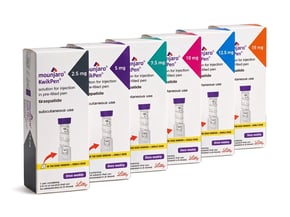
Weight loss with Wegovy is dose-dependent: higher maintenance doses generally produce greater average weight loss, which is one reason a prescriber may adjust your therapeutic dose over time rather than keeping you on the starting amount. Missing doses or delaying dose increases because of side effects can slow the timeline. Plateaus are also a normal, expected part of treatment: the body adapts, and periods of little movement on the scale are common even while the medication is still working. This is one reason many patients compare Wegovy vs Mounjaro when discussing which medication and dosing pattern might suit their response better.
Diet, activity and starting weight
Every major Wegovy clinical trial paired the medication with dietary counselling on nutrient-rich foods and increased physical activity: the drug supports appetite suppression, but food choices and activity levels still shape the outcome. Patients who make consistent, sustainable dietary habits and lifestyle changes alongside treatment tend to see results closer to, or above, the clinical trial averages. Starting weight also matters: percentage-based results mean someone with more total body weight to lose may see larger absolute changes on the scale, while someone closer to a healthy weight range may see a smaller percentage change even with good adherence. Underlying health conditions, sleep quality and other lifestyle habits can also influence outcomes and are worth discussing as part of your weight loss support.
What happens to weight if you stop Wegovy?
Stopping Wegovy is typically followed by substantial weight regain, because the appetite-suppressing effect fades once the drug clears your system. Follow-up data from semaglutide trials has shown that participants who discontinued treatment regained a meaningful portion of the weight they'd lost within a year of stopping, particularly if lifestyle interventions weren't maintained independently of the medication.[3]
This doesn't mean regain is inevitable or total. Patients who've used the treatment period to build healthy habits, such as different portion sizes, more regular activity and better dietary habits, tend to hold on to more of their sustained weight loss than those who return fully to previous habits. It's part of why Wegovy is generally framed as a long-term weight management tool rather than a short course with a fixed end point, and it's a good reason to think through the bigger picture of whether weight loss injections are safe and appropriate for your circumstances before you begin treatment.
When should you speak to a doctor about your results?
Contact your prescriber if you experience no weight change at all after the first two to three months on an appropriate dose, if side effects are severe or not improving over time, or if you notice rapid, unexplained weight loss beyond what would be expected. It's also worth checking in if a plateau lasts several months with no plan in place, if you're considering stopping treatment, or if you have weight-related health conditions such as changes in blood pressure or blood sugar that need monitoring alongside your results. Regular check-ins and ongoing clinical support are a normal part of a treatment plan, not just something for when something feels wrong.
FAQs
Quick answers to the questions people most often ask about Wegovy before and after results.
How much weight do people lose on Wegovy?
On average, clinical trial participants achieved an average weight loss of around 15% of their starting body weight over roughly 68 weeks (about 15–16 months) when combined with a reduced-calorie diet and physical activity. Individual results range widely, with some patients losing less and others achieving significant weight loss of 20% or more.
What do Wegovy results look like after 1 month?
Weight loss after one month is typically modest, around 0–2% of starting weight, since the first month uses a low starting dose intended for tolerance rather than maximum effect. Appetite changes are usually the first noticeable sign that treatment is working.
How much weight can you lose on Wegovy in 3 months?
By three months, cumulative weight loss is commonly in the 4–6% range of starting body weight for patients who've progressed through the early dose increases as planned.
Will I regain weight if I stop Wegovy?
Some regain is common after stopping, since appetite-suppressing effects fade once the medication leaves your system. The amount of regain tends to be lower for patients who've built lasting, sustainable dietary habits and lifestyle changes during treatment.
Can diet improve Wegovy weight loss results?
Yes. Every major clinical trial paired Wegovy with dietary counselling and increased activity, and this combination generally produces better outcomes than medication alone.
Why might the scales not move in the first weeks?
The first week and early weeks focus on a low starting dose meant to build tolerance, so noticeable weight loss usually hasn't started yet. Appetite and eating pattern changes typically appear before the scale reflects a significant shift.
-
[1] Wilding JPH, Batterham RL, Calanna S, et al; STEP 1 Study Group. Once-weekly semaglutide in adults with overweight or obesity. N Engl J Med. 2021;384(11):989-1002. doi:10.1056/NEJMoa2032183.
[2] Garvey WT, Batterham RL, Bhatta M, et al; STEP 5 Study Group. Two-year effects of semaglutide in adults with overweight or obesity: the STEP 5 trial. Nat Med. 2022;28(10):2083-2091. doi:10.1038/s41591-022-02026-4.
[3] Wilding JPH, Batterham RL, Davies M, et al; STEP 1 Study Group. Weight regain and cardiometabolic effects after withdrawal of semaglutide: the STEP 1 trial extension. Diabetes Obes Metab. 2022;24(8):1553-1564. doi:10.1111/dom.14725.