
How long does Wegovy take to work?
Maybe you've had your first injection and you're already checking the scale, or you're a month in and wondering whether anything's happening.
Either way, it's a fair question.
The short answer is that Wegovy is active in the body within days of the first injection, but it isn't a route to rapid weight loss. Treatment starts at a low dose that's increased over 16 weeks, and significant weight loss builds over months rather than weeks: in clinical trial data, it kept building for more than a year [1]. So how long Wegovy takes to work depends on what you're measuring. Appetite, side effects and weight all change on slightly different timelines, and how quickly each one shifts varies from person to person.
This article covers when Wegovy starts working, how to tell it's having an effect, what to do if you're still hungry and what can delay results.
How does Wegovy work?
Wegovy contains semaglutide, taken as a once-weekly injection. Semaglutide mimics GLP-1, a hormone that helps regulate appetite and calorie intake, and acts on areas of the brain involved in hunger and in how rewarding food feels. It helps people lose weight mainly by reducing how much they eat. Ozempic contains the same active ingredient, but the difference between Wegovy and Ozempic is that Ozempic is licensed for type 2 diabetes, at different doses [1, 2].
Treatment follows a set schedule. The dose increases every four weeks until you reach the 2.4 mg maintenance dose, and the gradual increase reduces the chance of digestive side effects. For adults with obesity, a prescriber can raise the dose to 7.2 mg if needed [1].
|
Weeks |
Weekly dose |
|
1 to 4 |
0.25 mg |
|
5 to 8 |
0.5 mg |
|
9 to 12 |
1 mg |
|
13 to 16 |
1.7 mg |
|
17 onwards |
2.4 mg (maintenance dose) |
|
If needed, adults with obesity only |
7.2 mg, after at least 4 weeks on 2.4 mg |
What happens in the first week?
After each injection, semaglutide levels in the blood peak within one to three days. The medicine has a half-life of about a week, which is why a single injection covers seven days. It's pharmacologically active from the first dose: in people with type 2 diabetes, semaglutide lowered fasting blood glucose after one injection [1, 2].
Trials haven't measured how much appetite changes in the first week at 0.25 mg, so there's no reliable figure for what to expect and it's better not to judge the medicine on the first few days.
Side effects are more likely early on and around each dose increase. Nausea, diarrhoea, vomiting and constipation are the most common. If you're feeling rough in those early weeks, it's easy to wonder whether it's worth it. In the main trials, 98.1% of these digestive side effects were mild to moderate, and individual episodes were usually short: a median of 8 days for nausea, 3 for diarrhoea and 2 for vomiting. Constipation tended to last longer [3].
Avoiding fatty meals can help manage digestive side effects: expert guidance recommends easy-to-digest, lower-fat food, smaller portions and eating slowly [4]. Hydration is important to manage Wegovy side effects too, as vomiting and diarrhoea can cause dehydration, so drink enough fluids, in small sips if you feel sick [1, 4].
If you have type 2 diabetes and take insulin or a sulfonylurea, your prescriber may lower those doses when you start, to reduce the risk of low blood sugar (hypoglycaemia) [1].
When does appetite usually change?
Trials have measured appetite after weeks of treatment rather than days. After 12 weeks on semaglutide 1.0 mg, people ate 24% less across a day of free-choice meals than they did on placebo, with less hunger and fewer cravings. After 20 weeks on 2.4 mg, energy intake at a free-choice lunch was 35% lower than with placebo, and people felt fuller, less hungry and more in control of their eating [5, 6].
This appetite suppression wasn't simply a result of feeling sick. Nausea ratings were similar to placebo in the 12-week trial, and across the main trials digestive side effects explained less than one percentage point of the weight lost [3, 5].
Trials haven't measured appetite in the first few weeks, so there's no reliable answer to how early most people notice a change. Experiences vary, and a quiet first month doesn't mean the medicine won't work.
Can the starting dose already work?
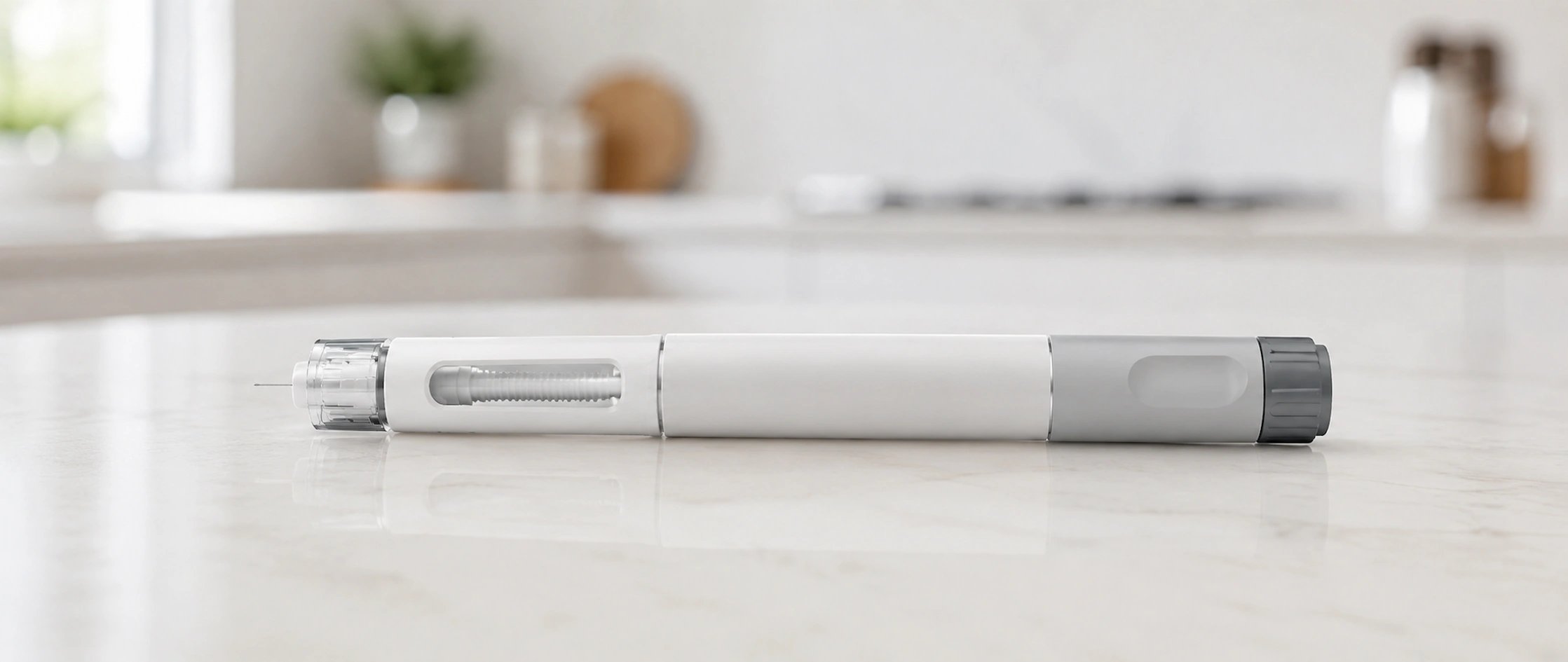
The 0.25 mg starting dose is mainly there while your body adjusts, not to deliver the full effect. Drug levels are correspondingly low: in one trial, semaglutide levels just before the next injection on 0.25 mg were about a quarter of those on 1.0 mg. The product information for semaglutide at diabetes doses states that 0.25 mg is not a maintenance dose [2, 5].
How much weight people lose tends to rise with dose. A phase 2 trial of daily semaglutide injections (a regimen that was never marketed) found average weight loss after a year ranged from 6.0% on the lowest dose to 13.8% on the highest, against 2.3% with placebo [7]. The starting month still counts towards treatment, but it's the point where a clear result is least likely.
How long until it feels more even from week to week?
Semaglutide builds up with each weekly dose and reaches a steady level after four to five weeks at the same dose. Because the Wegovy dose rises every four weeks during the first 16, levels keep climbing through that period and settle roughly a month after you reach 2.4 mg [2].
Side effects follow a similar arc. In pooled data from three large trials, the number of people having their first digestive side effect stopped rising after about week 20, and nausea, diarrhoea and vomiting were most common around that point before becoming less frequent [3]. For many people, the weeks after the final dose increase are when treatment starts to feel more predictable.
Does hunger come back before the next dose?
No trial has tracked appetite day by day across the week between injections, so it isn't known how often this happens.
What the evidence does show is how drug levels move. In a trial of semaglutide 1.0 mg, levels peaked around 33 hours after the injection, and just before the next dose they were still roughly 60% of that peak. With a half-life of about a week, the medicine doesn't wear off between injections; levels dip and then rise again [1, 5].
If hunger reliably returns late in the week, mention it to your prescriber rather than injecting early or adding an extra dose. Your injection day can be changed if needed, but doses need to be at least three days apart [1].
How do you know it has started working?

The earliest signs usually show up in your eating habits rather than on the scale. In the appetite trials, semaglutide led to smaller meals, feeling full sooner, fewer cravings and better control over eating [5, 6].
Weight loss follows. In STEP 1, the main trial of Wegovy in adults without diabetes, weight loss began early and continued throughout the 68 weeks. Average loss by the end was 14.9%, compared with 2.4% on placebo, and waist size fell by 13.5 cm, against 4.1 cm with placebo [1, 8].
Earlier checkpoints come from smaller studies. In the 20-week appetite trial, people on 2.4 mg lost 9.9% of their body weight without a structured diet programme. In a US clinic study, average weight loss was 5.9% at three months and 10.9% at six months, even though only 44% of people had reached the 1.7 mg or 2.4 mg dose [6, 9].
Explore related treatments
Wegovy
Mounjaro
Xenical
What if you are still as hungry as before?
Being several weeks in and feeling no different is frustrating, especially if you've heard stories of people losing weight quickly. People respond differently, and some start losing weight later than others. A slow start doesn't mean treatment has failed.
In STEP 1, 89.8% of people on semaglutide had lost at least 5% of their weight by week 28. Of those who hadn't, 40.5% reached that point by week 68 [1]. In real-world use the spread is wide too: in the US clinic study, weight change at three months ranged from a gain of 3.6% to a loss of 14.3% [9].
If you're still as hungry as before after several months, review it with your prescriber. They can check whether you're on the planned dose schedule and whether side effects have held your dose back. The product information says a decision on whether to continue is needed if you haven't lost at least 5% of your starting body weight after six months, and NICE guidance for NHS treatment advises considering stopping at that point [1, 10].
A different weight loss medication may suit some people better, so it's worth comparing Wegovy vs Mounjaro with your prescriber.
What can delay when it starts working?
The most common reason is a slower dose increase. If digestive side effects are significant, prescribers can delay the next step or go back to the previous dose until symptoms settle. In the main trials, 12.5% of people had their dose reduced or treatment paused because of digestive side effects [1, 3].
Missed doses and gaps in treatment can also affect weight loss. A single missed dose can usually be taken late, within five days. After several missed doses, restarting at a lower dose may be needed [1]. In a US real-world study, people who stayed on treatment for a year lost 13.8% of their weight on average, compared with 6.4% for those who had a gap of more than 60 days. That comparison is observational, and people who stop may do so for reasons such as side effects or cost that also affect results [11].
Type 2 diabetes is linked with less weight loss on the same dose. In STEP 2, adults with type 2 diabetes lost an average of 9.6% at 68 weeks on 2.4 mg, compared with 3.4% on placebo [1]. The US clinic study found the same pattern at three months: 3.9% with diabetes and 6.3% without [9].
Body weight matters as well. Higher body weight is associated with lower levels of semaglutide in the blood [1].
Frequently asked questions
Does Wegovy work after the first injection?
It starts acting straight away and reaches peak levels within one to three days. But 0.25 mg is a starting dose chosen for tolerability rather than weight loss, and the dose only reaches 2.4 mg from week 17 [1, 2].
Does a missed dose delay when it works?
If you miss a dose, take it as soon as you can within five days. If more than five days have passed, skip it and take the next dose on your usual day. Each Wegovy pen holds four weekly doses. If you've missed several doses, speak to your prescriber, as restarting at a lower dose may be needed [1].
Does the Wegovy pill take as long to work?
It follows a similar pattern. The Wegovy tablet contains semaglutide taken once a day and was approved in the UK in June 2026. It starts at 1.5 mg and steps up to 4 mg, 9 mg and then the 25 mg maintenance dose, with at least a month at each level, so the full dose is reached after three months at the earliest. At approval, the MHRA said it wasn't yet available on the NHS [12, 13].
In the main trial, the 25 mg tablet led to an average weight loss of 13.6% at 64 weeks, against 2.2% on placebo [14]. How you take it matters. It should be swallowed on an empty stomach after at least eight hours without food, with no more than half a glass of water, and you need to wait 30 minutes before eating, drinking or taking other tablets. Absorption varies more than with the injection, and a missed tablet is skipped rather than taken late [12].
Can you make Wegovy start working sooner?
Not by speeding up the dose schedule, which is designed to reduce digestive side effects. Wegovy is licensed for weight management alongside a reduced-calorie diet and increased physical activity, and the trial results were achieved with both in place [1, 8]. Keeping to your dose schedule helps too, as covered above.
Is it working if the scale has not moved yet?
It may be. Changes such as smaller portions and fewer cravings are signs the medicine is acting [6]. Weight loss is gradual, and both the product information and NICE guidance use six months, not the first few weeks, as the point to review progress [1, 10].
Do you only notice it once the dose goes up?
Not necessarily, but higher doses tend to bring more weight loss. Appetite effects were clear at 1.0 mg, which is below the Wegovy maintenance dose, while weight loss rose with dose in the phase 2 trial [5, 7]. In the US clinic study, people on 1.7 mg or 2.4 mg had lost 6.9% at three months, compared with 5.1% on lower doses [9].
-
1. Novo Nordisk Limited. Wegovy 2.4 mg, FlexTouch solution for injection in pre-filled pen: summary of product characteristics. Electronic Medicines Compendium. Updated September 22, 2026. https://www.medicines.org.uk/emc/product/13803/smpc
2. Novo Nordisk Limited. Ozempic 1 mg solution for injection in pre-filled pen: summary of product characteristics. Electronic Medicines Compendium. Updated July 28, 2026. https://www.medicines.org.uk/emc/product/9749/smpc
3. Wharton S, Calanna S, Davies M, et al. Gastrointestinal tolerability of once-weekly semaglutide 2.4 mg in adults with overweight or obesity, and the relationship between gastrointestinal adverse events and weight loss. Diabetes Obes Metab. 2022;24(1):94-105. doi:10.1111/dom.14551
4. Gorgojo-Martínez JJ, Mezquita-Raya P, Carretero-Gómez J, et al. Clinical recommendations to manage gastrointestinal adverse events in patients treated with Glp-1 receptor agonists: a multidisciplinary expert consensus. J Clin Med. 2023;12(1):145. doi:10.3390/jcm12010145
5. Blundell J, Finlayson G, Axelsen M, et al. Effects of once-weekly semaglutide on appetite, energy intake, control of eating, food preference and body weight in subjects with obesity. Diabetes Obes Metab. 2017;19(9):1242-1251. doi:10.1111/dom.12932
6. Friedrichsen M, Breitschaft A, Tadayon S, Wizert A, Skovgaard D. The effect of semaglutide 2.4 mg once weekly on energy intake, appetite, control of eating, and gastric emptying in adults with obesity. Diabetes Obes Metab. 2021;23(3):754-762. doi:10.1111/dom.14280
7. O'Neil PM, Birkenfeld AL, McGowan B, et al. Efficacy and safety of semaglutide compared with liraglutide and placebo for weight loss in patients with obesity: a randomised, double-blind, placebo and active controlled, dose-ranging, phase 2 trial. Lancet. 2018;392(10148):637-649. doi:10.1016/S0140-6736(18)31773-2
8. Wilding JPH, Batterham RL, Calanna S, et al; STEP 1 Study Group. Once-weekly semaglutide in adults with overweight or obesity. N Engl J Med. 2021;384(11):989-1002. doi:10.1056/NEJMoa2032183
9. Ghusn W, De la Rosa A, Sacoto D, et al. Weight loss outcomes associated with semaglutide treatment for patients with overweight or obesity. JAMA Netw Open. 2022;5(9):e2231982. doi:10.1001/jamanetworkopen.2022.31982
10. National Institute for Health and Care Excellence. Semaglutide for managing overweight and obesity. Technology appraisal guidance TA875. Published March 8, 2023. Updated September 4, 2023. https://www.nice.org.uk/guidance/ta875
11. Baalmann A, Michel J, Avedissian SN, Pow A, Farris K. Real-world use of semaglutide for obesity treatment: a cohort study in an integrated health care delivery system. J Manag Care Spec Pharm. 2026;32(6):660. doi:10.18553/jmcp.2026.32.6.660
12. Novo Nordisk Limited. Wegovy 25 mg tablets: summary of product characteristics. Electronic Medicines Compendium. Updated June 16, 2026. https://www.medicines.org.uk/emc/product/102347/smpc
13. Medicines and Healthcare products Regulatory Agency. First GLP-1 tablet for weight loss approved in the UK. GOV.UK. Published June 11, 2026. https://www.gov.uk/government/news/first-glp-1-tablet-for-weight-loss-approved-in-the-uk
14. Wharton S, Lingvay I, Bogdanski P, et al; OASIS 4 Study Group. Oral semaglutide at a dose of 25 mg in adults with overweight or obesity. N Engl J Med. 2025;393(11):1077-1087. doi:10.1056/NEJMoa2500969