
If you are asking “what's the difference between Ozempic and Mounjaro?”, they contain different active ingredients and have different licensed uses in the UK. Mounjaro contains tirzepatide and is licensed for type 2 diabetes and adult weight management, including weight loss and weight maintenance in eligible adults. Ozempic contains semaglutide and is licensed for type 2 diabetes, not as a weight loss treatment. [1, 2]
That distinction matters if you are comparing Mounjaro vs Ozempic for weight loss, blood sugar control or a possible switch. Both Mounjaro and Ozempic are once-weekly injectable medications supplied in pre-filled multi-dose pens in the UK, but their doses are not equivalent. An Ozempic vs Mounjaro comparison should consider licensed use, dose and medical history. [1, 2]
|
Feature |
Mounjaro |
Ozempic |
|
Active ingredient |
Tirzepatide |
Semaglutide |
|
Action |
GIP + GLP-1 |
GLP-1 |
|
UK licensed uses |
Type 2 diabetes; adult weight management |
Type 2 diabetes |
|
Adult maximum dose |
15 mg weekly |
2 mg weekly |
|
UK weight loss licence |
Yes, for eligible adults |
No |
If you are considering Mounjaro online, a prescription assessment should establish whether this weight loss treatment fits your needs rather than choosing between weight loss injections from headline results.
How do Mounjaro and Ozempic work?
Mounjaro and Ozempic work through gut-hormone pathways involved in appetite and managing blood sugar levels. Semaglutide activates GLP-1 receptors; tirzepatide activates both GLP-1 and glucose dependent insulinotropic polypeptide (GIP) receptors. [1, 2]
This action stimulates insulin secretion when glucose is raised, helping regulate blood sugar levels. It can also slow gastric emptying and regulate appetite, leading to reduced appetite and lower calorie intake.
Together, these effects can improve appetite and glucose control, supporting weight loss and helping people lose weight while the medicines also regulate blood sugar. Tirzepatide's activity at both GIP and GLP-1 receptors may contribute to its effects on body weight and blood sugar control, although differences between the medicines are best assessed from direct clinical trial evidence. Both can regulate appetite, but their overall effects differ.
Understanding how Mounjaro works means looking beyond appetite suppression: appetite regulation, insulin secretion and the way the medication affects glucose handling all matter.
Explore related treatments
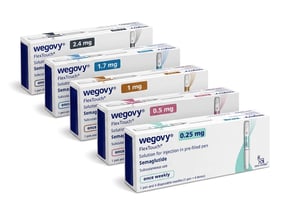
Wegovy
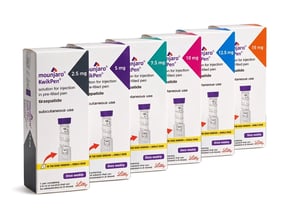
Mounjaro
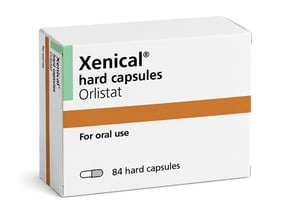
Xenical
Ozempic vs Mounjaro for weight loss
For licensed UK weight management, Mounjaro has the clearer role because it is approved for weight loss and maintenance in eligible adults; Ozempic is a diabetes medicine. Semaglutide can lead to weight loss, but the brand licensed for obesity and weight management is Wegovy. [1, 2, 3]
This matters when interpreting average weight loss figures. Wegovy trial results should not be relabelled as Ozempic weight loss results just because the products share the same active ingredient. Searching for “weight loss Ozempic” can therefore blur two different uses.
Weight loss injections can help people lose weight by increasing fullness, reducing hunger and lowering calorie intake. Reduced appetite may make a lower energy intake easier to maintain. They cannot selectively remove belly fat: as body weight falls, fat storage may decrease across the body, including the abdomen, but targeted fat reduction is not how these medicines work.
In a licensed weight loss drug comparison, Wegovy vs Mounjaro involves two medicines licensed for weight management, whereas Wegovy vs Ozempic compares two semaglutide brands that share the same active ingredient but not the same licensed purpose.
What did the clinical trials show?
Clinical trials show that tirzepatide can produce significant weight loss, but results depend on dose, population and study design. Context matters in clinical trials. In SURMOUNT-1, mean weight loss at 72 weeks was 15.0%, 19.5% and 20.9% with tirzepatide 5 mg, 10 mg and 15 mg under the treatment-regimen estimand. [4]
The often-quoted 22.5% figure came from a different efficacy estimand for the 15 mg dose, so it should not be treated as a universal average weight loss. The claim that Mounjaro users lost 89% of their starting weight is also wrong: 89% of participants taking 10 mg achieved at least 5% weight loss. [4]
SURMOUNT-5 directly compared tirzepatide with weight-management-dose semaglutide in adults with obesity without diabetes. Mean weight loss at 72 weeks was 20.2% with tirzepatide and 13.7% with semaglutide, showing significant weight loss with both and greater average weight loss with tirzepatide in that study. [5] It was not an Ozempic weight loss trial.
SURMOUNT-3 reported 26.6% total weight reduction after a 12-week intensive lifestyle programme followed by 72 weeks of tirzepatide, so the figure should not be presented as Mounjaro-only weight loss. [6] STEP 1 found about 15% mean weight loss with semaglutide 2.4 mg; that supports chronic weight management with semaglutide but not the claim that “Ozempic users lose 15%”. [7]
Is Mounjaro better than Ozempic for blood sugar control?
For Ozempic vs Mounjaro blood sugar control, SURPASS-2 found greater HbA1c reductions with tirzepatide than semaglutide 1 mg, although that does not make Mounjaro universally better. At 40 weeks, HbA1c fell by 2.01, 2.24 and 2.30 percentage points with tirzepatide 5, 10 and 15 mg, versus 1.86 with semaglutide 1 mg. [8]
Mounjaro and Ozempic can both control blood sugar and improve blood glucose control. Their glucose-dependent action helps regulate blood sugar levels while reducing glucagon signalling. Both can also regulate blood sugar levels as part of diabetes management and managing blood sugar levels. Tolerability, cardiovascular risks and other health priorities can shape the treatment plan.
Ozempic has established cardiovascular benefits: SUSTAIN-6 found fewer major cardiovascular events with semaglutide than placebo in people with type 2 diabetes at high cardiovascular risk. [2] Tirzepatide also has outcome evidence: SURPASS-CVOT found it non-inferior to dulaglutide for cardiovascular death, myocardial infarction or stroke in people with type 2 diabetes and atherosclerotic cardiovascular disease. [1]
Who can take Mounjaro or Ozempic?
Mounjaro and Ozempic have different UK eligibility because their licences differ. For adult weight management, Mounjaro is indicated from a body mass index of 30 kg/m², or 27 to under 30 kg/m² with at least one weight related health condition, such as high blood pressure, dyslipidaemia, sleep apnoea, cardiovascular disease, prediabetes or type 2 diabetes. These weight related medical conditions, and existing heart disease, can influence treatment choice. [1] Its diabetes indication extends to people aged 10 years and over; its weight management indication is for adults. [1]
Ozempic is licensed for adults with insufficiently controlled type 2 diabetes. [2] It can be used alone when metformin is unsuitable or with other medicines as part of diabetes management.
A prescriber should consider pregnancy, previous pancreatitis, severe gastrointestinal disease and medicines that lower blood sugar. Severe allergic reactions need urgent medical help. [1, 2, 9]
For Mounjaro, caution is advised in severe gastrointestinal disease, including severe gastroparesis. Tirzepatide should not be used during pregnancy. For women with overweight or obesity using oral contraception, the UK SmPC advises a non-oral method or additional barrier contraception for four weeks after starting and for four weeks after each dose increase. [1]
There is no universal food-avoidance list for Mounjaro. More important are not changing the dose yourself, not combining weight loss medications without clinical advice and avoiding unregulated weight loss injections. These steps keep the weight loss journey within a safe treatment plan.
Can Ozempic be prescribed for weight loss?
Ozempic is not licensed in the UK for chronic weight management. It may be associated with weight loss during diabetes treatment, but it is not licensed to “treat weight loss”. A clinician may prescribe Ozempic off label when justified; however, off label use for weight loss is not an approved indication, and weight loss off label remains outside licensed use. [2, 10]
For obesity and weight management, the licensed semaglutide brand is Wegovy.[3] So there is no direct UK “equivalent of Ozempic” for weight loss that can simply be swapped in, although Wegovy contains the same active ingredient and is licensed for weight management.
A private prescription still requires clinical assessment. Ozempic may cause weight loss during diabetes treatment, but that does not make it a licensed weight loss drug.
Ozempic vs Mounjaro side effects

Ozempic vs Mounjaro side effects overlap. Nausea, diarrhoea, vomiting, constipation and stomach pain are common gastrointestinal effects, while reduced appetite and fatigue may also occur. Symptoms are often more noticeable as the body adjusts during dose escalation. [1, 2]
The cons of Mounjaro include gradual dose escalation and the possibility of Mounjaro side effects ranging from gastrointestinal symptoms to rarer serious adverse effects. People may stop Ozempic for different reasons, including side effects, insufficient blood sugar control, access or a change in treatment plan; there is no single explanation.
The MHRA strengthened warnings in January 2026 about the small risk of severe acute pancreatitis with these medicines. Severe, persistent stomach pain that may spread to the back, with or without nausea or vomiting, needs urgent assessment.
New or worsening stomach pain should not be dismissed as routine. Vomiting or diarrhoea can also cause dehydration and, in rare cases, kidney problems or worsening kidney function. Hypoglycaemia risk can also rise when either medicine is used with insulin or a sulphonylurea. [1, 2, 9]
Mounjaro should not be assumed to cause more severe gastrointestinal effects for everyone. Allergic reactions can occur with both. In US labelling, Zepbound, the tirzepatide product FDA approved for chronic weight management, carries a warning about thyroid C-cell tumours in rats and medullary thyroid cancer. Mounjaro was separately FDA approved for type 2 diabetes. These are US, not UK, regulatory points. [11]
Mounjaro vs Ozempic dose
Mounjaro vs Ozempic dosing uses gradual escalation so the body adjusts before higher doses are considered. In an Ozempic vs Mounjaro dose comparison, higher doses still cannot be matched milligram for milligram. [1, 2]
Mounjaro starts at 2.5 mg weekly, increasing to 5 mg after four weeks. Further 2.5 mg increases can be made after at least four weeks at the current dose. For adults, 5, 10 and 15 mg are maintenance dose options; the maximum dose is 15 mg. [1]
Ozempic starts at 0.25 mg weekly, rising to 0.5 mg after four weeks. For additional blood sugar control, it can then increase to 1 mg and, if needed, to a maximum dose of 2 mg after at least four weeks at each preceding dose. The 0.25 mg dose is not a maintenance dose. [2]
Mounjaro and Ozempic are different medicines, so there is no milligram-for-milligram conversion. Higher doses do not automatically mean greater individual benefit.
There is no fixed answer to how long Mounjaro takes to work. Appetite and blood sugar can change before maximum weight loss develops. For weight management, the UK SmPC says treatment should be reconsidered if at least 5% of starting weight has not been lost six months after reaching the highest tolerated dose. [1]
How much does Mounjaro vs Ozempic cost in the UK?
Mounjaro vs Ozempic cost depends on dose, NHS or private access and what a provider includes. An Ozempic vs Mounjaro price comparison also has to account for their different licensed uses. US dollar prices quoted online do not reflect UK treatment costs.
NICE lists four-week Mounjaro prices, excluding VAT, at £133 for 2.5 mg, £180 for 5 mg, £255 for 7.5 or 10 mg and £330 for 12.5 or 15 mg. NHS commercial arrangements can differ from list price. [12]
Private weight loss treatment prices vary. Private weight loss treatment prices vary. The Mounjaro price can differ by dose and provider; Apomeds currently shows prices from £140.61.
Because Ozempic is a diabetes medicine rather than a licensed UK weight loss treatment, it is not reliable to say Mounjaro is generally more expensive without comparing equivalent UK access routes and doses. The same applies to claims that Wegovy is always a more affordable alternative: private prices vary by dose and provider.
NHS access to Mounjaro for weight management in England is phased. Primary-care implementation began in June 2025 for prioritised cohorts, while specialist services use NICE criteria subject to clinical assessment and local pathways. [13]
Can I switch from Ozempic to Mounjaro?
Yes, a prescriber may switch from Ozempic to Mounjaro when clinically appropriate, but there is no direct dose equivalence. MHRA guidance says to consult a healthcare professional before switching because GLP-1 medicines differ in strength, use and licensed indications. [3]
Do not calculate a conversion yourself; follow the timing and dose given by your prescriber. Mounjaro alternatives may be considered when another treatment is more suitable, but switching injectable medications remains a prescribing decision.
Frequently asked questions
These answers compare Mounjaro and Ozempic without assuming one suits everyone.
Is Mounjaro better than Ozempic?
Mounjaro is not better for everyone. Tirzepatide produced greater average weight loss than weight-management-dose semaglutide in SURMOUNT-5 and greater HbA1c reductions than semaglutide 1 mg in SURPASS-2. [5, 8] Which is better depends on licensed use, blood sugar control, weight loss goals, tolerability and cardiovascular considerations.
Do Mounjaro and Ozempic have the same active ingredient?
No. Mounjaro and Ozempic do not have the same active ingredient: Mounjaro contains tirzepatide, and Ozempic contains semaglutide. [1, 2] Tirzepatide targets GIP and GLP-1 receptors; semaglutide targets GLP-1.
Which is safer, Mounjaro or Ozempic?
Neither is safer for everyone. Both Mounjaro and Ozempic have common gastrointestinal effects and important precautions. [1, 2, 9] Safety depends on medical history, other medicines and how the individual responds as higher doses are introduced.
Can I take Ozempic and Mounjaro together, or with other medications?
No. NICE advises that people already taking a GLP-1 receptor agonist such as semaglutide should not receive tirzepatide at the same time. [14] If treatment is being changed, follow the schedule given by your prescriber rather than overlapping injections. [3]
Both Ozempic and Mounjaro can be used with some other medications when prescribed appropriately. Insulin and sulphonylureas need particular care because of hypoglycaemia risk. [1, 2]
Is Ozempic available on the NHS for weight loss?
No. Ozempic is the semaglutide brand for type 2 diabetes, while Wegovy is the semaglutide weight loss treatment used for obesity and weight management. [3] NHS weight loss medications are subject to eligibility criteria and local pathways.
Is Ozempic or Mounjaro better for type 2 diabetes?
Both can improve blood sugar control. SURPASS-2 found greater average HbA1c reductions with tirzepatide than with semaglutide 1 mg, but diabetes patients may prioritise cardiovascular disease, kidney health, weight loss or tolerability differently. [8] Diabetes treatment depends on the clinical picture.
-
-
Eli Lilly and Company Limited. Mounjaro KwikPen 15 mg solution for injection in pre-filled pen: Summary of Product Characteristics. electronic Medicines Compendium.
-
Novo Nordisk Limited. Ozempic 1 mg solution for injection in pre-filled pen: Summary of Product Characteristics. electronic Medicines Compendium.
-
Medicines and Healthcare products Regulatory Agency. GLP-1 medicines for weight loss and diabetes: what you need to know. Updated February 5, 2026.
-
Jastreboff AM, Aronne LJ, Ahmad NN, et al. Tirzepatide once weekly for the treatment of obesity. N Engl J Med.2022;387:205-216. doi:10.1056/NEJMoa2206038.
-
Aronne LJ, Horn DB, le Roux CW, et al. Tirzepatide as compared with semaglutide for the treatment of obesity. N Engl J Med. 2025;393:26-36. doi:10.1056/NEJMoa2416394.
-
Wadden TA, Chao AM, Machineni S, et al. Tirzepatide after intensive lifestyle intervention in adults with overweight or obesity: the SURMOUNT-3 phase 3 trial. Nat Med. 2023;29:2909-2918. doi:10.1038/s41591-023-02597-w.
-
Wilding JPH, Batterham RL, Calanna S, et al. Once-weekly semaglutide in adults with overweight or obesity. N Engl J Med. 2021;384:989-1002. doi:10.1056/NEJMoa2032183.
-
Frías JP, Davies MJ, Rosenstock J, et al. Tirzepatide versus semaglutide once weekly in patients with type 2 diabetes. N Engl J Med. 2021;385:503-515. doi:10.1056/NEJMoa2107519.
-
Medicines and Healthcare products Regulatory Agency. GLP-1 receptor agonists and dual GLP-1/GIP receptor agonists: strengthened warnings on acute pancreatitis, including necrotising and fatal cases. January 29, 2026.
-
General Medical Council. Prescribing unlicensed medicines.
-
US Food and Drug Administration. FDA approves new medication for chronic weight management. November 8, 2023.
-
National Institute for Health and Care Excellence. Tirzepatide for managing overweight and obesity: information about tirzepatide.
-
NHS England. Interim commissioning guidance: implementation of NICE TA1026 and the NICE funding variation for tirzepatide (Mounjaro) for the management of obesity. Updated April 2, 2026.
-
National Institute for Health and Care Excellence. Prescribing, reviewing and stopping tirzepatide.
-